
Under-Sink Organization Without Wasted Space
Turn an awkward cabinet around plumbing into safe, visible storage for the supplies you use most.
Shopping disclosure: Well1566 Home may earn a commission from qualifying purchases made through marked links, at no extra cost to you. Recommendations are based on use cases and published details; we do not claim hands-on use unless an article explicitly documents it. Read our full disclosure.
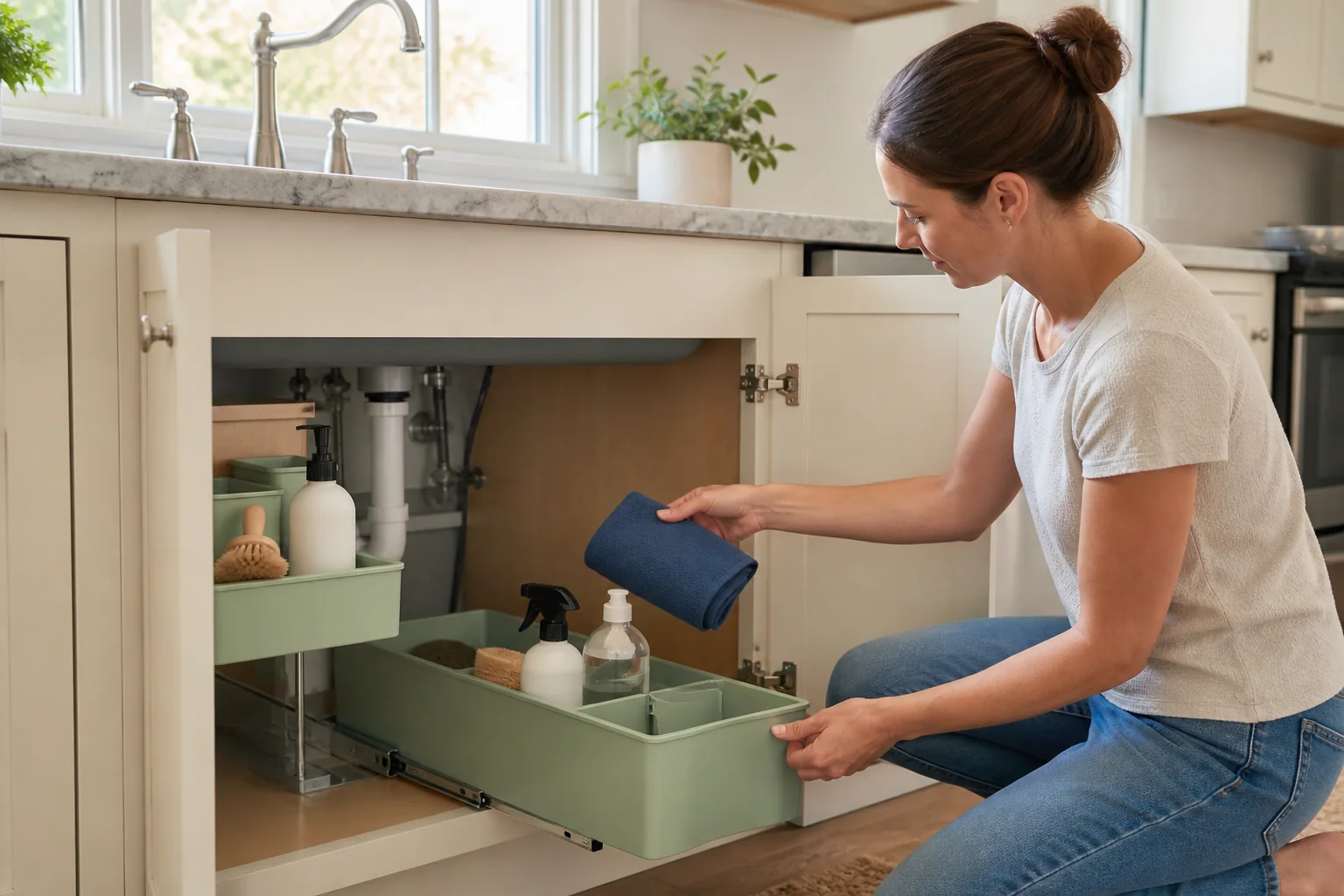
The cabinet beneath a sink looks generous until pipes, a disposal unit, shutoff valves, and the cabinet frame interrupt every straight line. Without a plan, bottles gather in the front while sponges and refills disappear at the back. Good under-sink organization accepts those obstacles and creates removable zones around them instead of pretending the cabinet is an empty rectangle.
Safety and access come before capacity. Keep only products appropriate to the room, follow every label's storage directions, and use child-resistant cabinet hardware where the household requires it. Never combine cleaning products, and avoid decanting them into unlabeled containers. The organizer should make leaks, labels, and valve access easier to see, not hide them.
A Spill Behind the Cabinet Door
A dish-soap refill has fallen behind a cluster of spray bottles, and a slow drip from a loose cap reaches the cabinet floor before anyone notices. When the sink backs up, the shutoff valve is blocked by a stack of loose cloths and dishwasher tablets. Clearing the cabinet during a plumbing problem adds stress to an already unpleasant morning.
After a reset, daily dish supplies sit in a handled caddy near the door, refills occupy a washable pullout bin, and cloths hang on an interior rail without touching the pipes. A shallow tray protects the base and makes a leak visible. The valves remain unobstructed, so supplies can be removed quickly if maintenance is needed.
Measure the Obstacles, Not Just the Cabinet
Remove everything, check for dampness or damage, and resolve any active leak before organizing. Measure the cabinet opening, internal width, depth, and height, then map pipe positions, disposal housing, hinges, and the swing of the doors. Photographing the empty space with a tape measure in view can help when comparing product dimensions online.
Keep a clear route to shutoff valves and removable plumbing fittings. A tall shelf may fit on one side but prevent access from the front; a narrower freestanding unit can be more practical. Account for the height of bottles, including pump tops, and for the extra clearance needed to lift an item out of a bin.
- Measure at the narrowest point around pipes and hinges.
Use Removable Zones for Real Tasks
Group supplies by job: dishwashing, counter cleanup, floor care, and refills. A portable caddy is useful for products that travel to another room, while a low-sided tray keeps dishwasher supplies together. Deep pullout bins can reach the back of the cabinet, but they need stops or smooth slides so heavy bottles do not tip when pulled.
Vertical space is valuable only when both levels remain usable. A two-tier organizer should fit around plumbing and allow the lower tier to slide without striking the door frame. Tension rods can hold light spray bottles, but they must be installed securely and should not press against pipes. Door-mounted storage is helpful for light items if the added depth clears everything inside when closed.
- Keep frequently used supplies in the front or in a lift-out caddy.
Contain Leaks and Maintain Safe Visibility
A waterproof or water-resistant cabinet tray with a raised edge can contain a small spill long enough to be noticed. Choose one that can be removed for cleaning and does not cover evidence of an ongoing plumbing leak indefinitely. Transparent or open bins keep labels readable; if children can access the cabinet, use suitable locks and relocate higher-risk products according to their label guidance.
Review the cabinet monthly when replacing dish soap or trash bags. Wipe bottle bases, discard empty packages appropriately, and check the cabinet floor and pipes for moisture. Keep products in original containers, facing forward, with closures secure. More storage is not the goal if it encourages keeping duplicates that expire, leak, or obstruct maintenance.
- Use original labeled containers and keep caps secure.
A quick before-you-buy checklist
- Resolve active leaks before adding storage.
- Measure pipes, valves, hinges, and door clearance.
- Keep service points visible and unobstructed.
- Store products according to their original labels.
- Choose removable, washable bins for liquids.
- Use appropriate child-resistant access controls if needed.
The bottom line
Treat an under-sink cabinet as a service area, not a packed supply closet. Protect plumbing access, contain bottles in removable zones, and measure every obstruction. Clear labels and visible surfaces are more valuable than squeezing in another tier.
Frequently asked questions
Should cleaning products be stored under the kitchen sink?
Only if their labels permit that location and the cabinet is secure for your household. Keep products upright in original containers, never mix them, and consider a locked or higher location when children or pets could gain access.
Can I install a tension rod around plumbing?
A tension rod may hold light spray bottles if it fits securely without pressing on pipes or blocking valves. Check it regularly because a slipped, overloaded rod can damage bottles or make the cabinet harder to access.
What should never be blocked under a sink?
Keep shutoff valves, drain fittings, disposal access, and visible plumbing connections reachable. You should be able to remove stored supplies quickly and inspect the cabinet floor for moisture without dismantling a complicated stack.
More in Cleaning & Organization
More guides you'll use

How to Choose a Cordless Vacuum for Daily Messes
Find a cordless vacuum that suits your floors, storage, household debris, and realistic cleaning rhythm.
Read the guide
Mop Systems for Quick Kitchen and Entryway Cleanups
Compare spray, spin, and flat mop systems by the spills, floor finishes, and storage limits in your home.
Read the guide
Closet Hangers That Make a Small Wardrobe Feel Bigger
Choose hanger shapes and materials that protect clothes, improve visibility, and use a compact rail wisely.
Read the guide