
Mop Systems for Quick Kitchen and Entryway Cleanups
Compare spray, spin, and flat mop systems by the spills, floor finishes, and storage limits in your home.
Shopping disclosure: Well1566 Home may earn a commission from qualifying purchases made through marked links, at no extra cost to you. Recommendations are based on use cases and published details; we do not claim hands-on use unless an article explicitly documents it. Read our full disclosure.
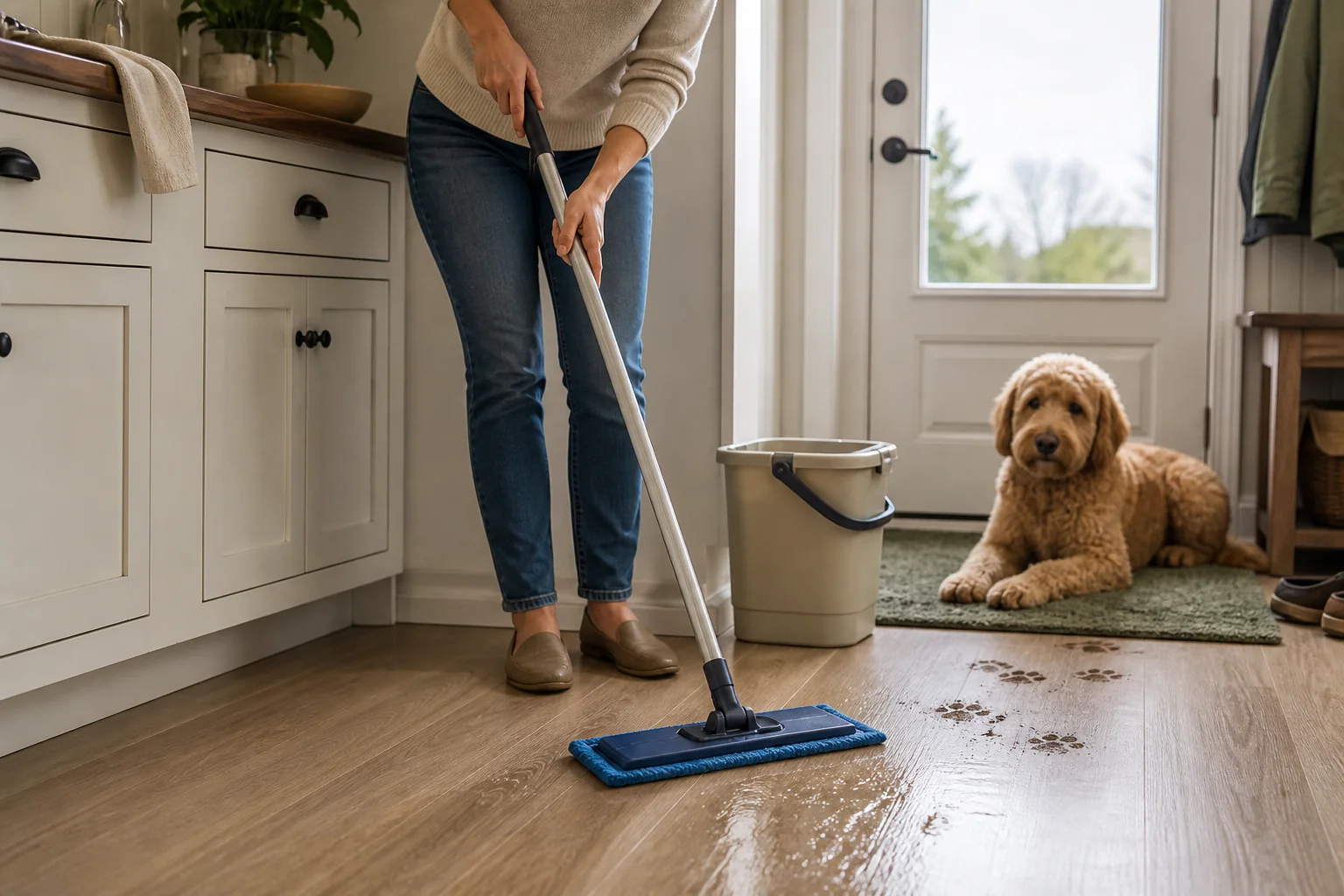
The most useful mop is the one you can reach before a sticky splash becomes a weekend job. Kitchens and entryways produce frequent, localized messes, so setup time, moisture control, washable pads, and storage can matter more than the ability to cover a huge floor. Different systems handle those priorities in different ways.
Begin with the care instructions for your flooring. Sealed tile, vinyl, laminate, and finished wood may have different limits on water and cleaning solutions. A system that dispenses more liquid is not automatically more effective, and excess moisture can be a poor match for some surfaces or seams.
Rainy Shoes and a Sauce Spill
A child walks through the entry with damp shoes while pasta sauce lands near the stove. The marks are small, but they cross two floor zones and need attention before foot traffic spreads them. A bucket in the garage feels too far away, and a disposable pad may not have enough texture for the dried edge of the spill.
A well-matched flat or spray mop hangs in a utility nook with a clean pad ready. It turns around the entry bench, uses only the amount of moisture the floor permits, and sends its washable pad into a small laundry bin afterward. For occasional larger cleaning sessions, a bucket-based system may still offer better rinsing.
Understand the Main Mop Formats
Spray mops carry solution on the handle and excel at quick, controlled passes without a separate bucket. Flat mops have a low profile and broad pad, making them useful beneath cabinets and along baseboards; some are paired with a spray reservoir, while others use a separately dampened pad. Spin systems use a bucket mechanism to control how wet the mop head remains and can suit larger areas or dirtier water.
Traditional string or strip heads hold more liquid and can reach uneven surfaces, but they require storage space and careful wringing. Disposable-pad systems reduce pad laundry but create repeat purchases and more waste. Compare each format with the size and frequency of the job rather than expecting one to dominate every situation.
- Choose fast setup for frequent spot cleaning.
Control Moisture and Cleaning Solution
Check both the floor manufacturer's care guidance and the mop maker's instructions. Some reservoirs are designed for specific solutions, and adding oils, concentrated products, or hot water may damage components or leave residue. A visible, refillable reservoir is convenient, but it should be easy to remove, rinse, and seal without leaking during storage.
Washable microfiber pads can pick up fine debris and spread a small amount of liquid evenly. Look for attachment points that keep the pad flat during turns and enough spare pads to avoid using a dirty one on another room. Color coding or separate storage helps prevent a bathroom pad from returning to the kitchen.
- Follow the flooring maker's approved moisture and solution guidance.
Check Reach, Ergonomics, and Storage
A swiveling head helps around table legs, but a very loose joint can be frustrating during straight passes. Adjustable handles may suit households with different users, while a fixed handle has fewer moving parts. Inspect the grip, trigger position, overall weight when the reservoir is full, and the profile needed to reach beneath appliances or an entry bench.
Plan where damp equipment will dry. A mop pressed into a dark closet immediately after use can develop odors, and a bucket must drain fully without becoming an obstacle. Wall hooks, ventilated utility areas, and spare pads stored nearby make the system easier to return to service.
- Measure the narrowest storage location and under-furniture gap.
A quick before-you-buy checklist
- Read the care instructions for every floor finish.
- Match system size to spot cleaning or whole-room use.
- Check full-reservoir or filled-bucket handling.
- Confirm that pads and refills are readily available.
- Choose washable pads with secure attachment points.
- Plan a ventilated place for wet parts to dry.
- Measure storage and under-furniture clearance.
The bottom line
For everyday kitchen and entryway messes, speed and moisture control usually matter most. A spray or simple flat mop suits frequent small jobs, while a spin system earns its larger footprint when rinse water and broader coverage are priorities. Buy for your floor-care rules, cleaning radius, and realistic willingness to wash pads.
Frequently asked questions
Can I use the same mop on every hard floor?
Not automatically. Review each flooring manufacturer's care guidance, especially moisture and solution restrictions. You may use the same handle with separate clean pads, but the cleaning method and liquid amount should suit the specific surface.
How many reusable mop pads should I buy?
Enough to start with a clean pad for each distinct area and still have one available while laundry is pending. Households that clean frequently may value several spares, but confirm that replacements remain easy to purchase.
Is a spray mop enough for muddy entryway floors?
It can handle light tracks after loose grit is removed, but a heavily soiled area may need repeated clean pads or a bucket system that separates dirty rinse water. Avoid spreading abrasive particles by sweeping or vacuuming first.
More in Cleaning & Organization
More guides you'll use

How to Choose a Cordless Vacuum for Daily Messes
Find a cordless vacuum that suits your floors, storage, household debris, and realistic cleaning rhythm.
Read the guide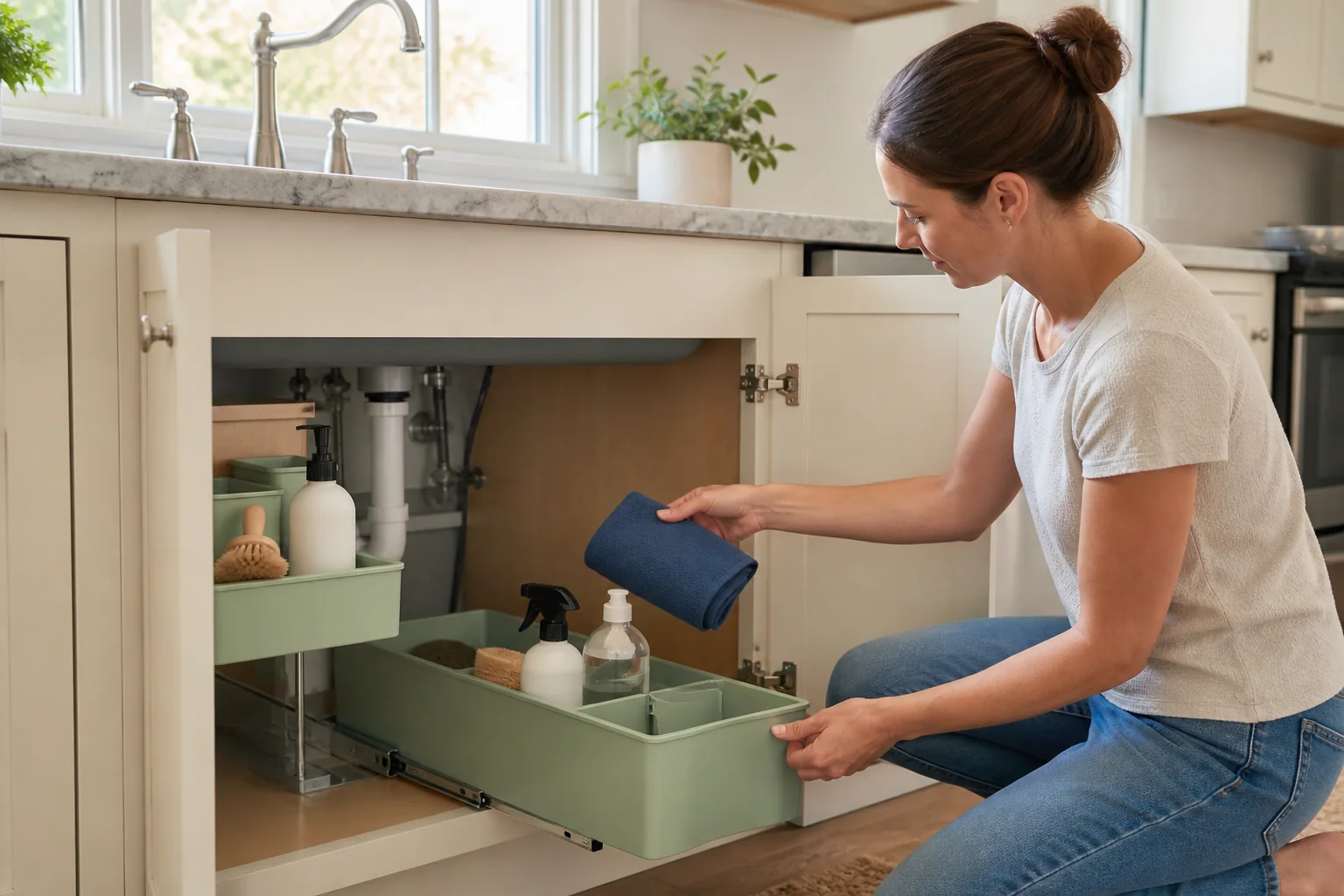
Under-Sink Organization Without Wasted Space
Turn an awkward cabinet around plumbing into safe, visible storage for the supplies you use most.
Read the guide
Closet Hangers That Make a Small Wardrobe Feel Bigger
Choose hanger shapes and materials that protect clothes, improve visibility, and use a compact rail wisely.
Read the guide