
Closet Hangers That Make a Small Wardrobe Feel Bigger
Choose hanger shapes and materials that protect clothes, improve visibility, and use a compact rail wisely.
Shopping disclosure: Well1566 Home may earn a commission from qualifying purchases made through marked links, at no extra cost to you. Recommendations are based on use cases and published details; we do not claim hands-on use unless an article explicitly documents it. Read our full disclosure.
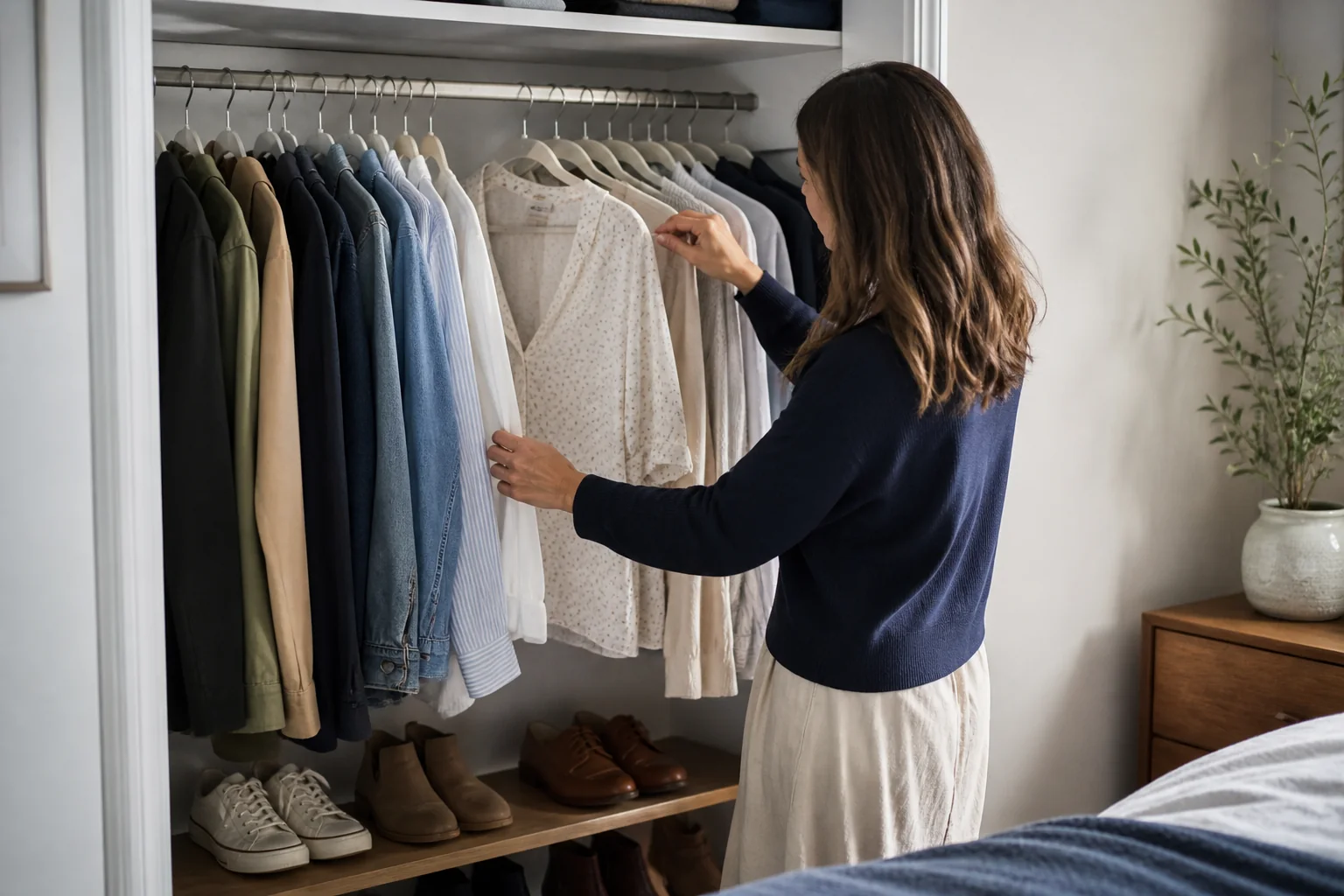
Matching hangers can make a closet look calmer, but appearance is only the beginning. Thickness, shoulder shape, surface grip, trouser bars, and hook design determine how much rail space you gain and how well garments hold their shape. The best compact-closet strategy usually uses one slim everyday hanger plus a few purpose-built options for heavier or delicate pieces.
Before replacing everything, edit what deserves hanging. Fold heavy knits that could stretch, move rarely worn formalwear to a less prominent zone, and remove empty hangers that crowd the rail. A slightly open closet makes clothing easier to see and retrieve; compressing garments until they wrinkle simply transfers the space problem to the ironing board.
A Crowded Monday-Morning Rail
At seven in the morning, a work shirt is wedged between a bulky coat hanger and three tangled wire hangers. A blouse slips onto the floor as another item is removed, while trousers folded over a smooth bar slide to one side. The closet technically holds the week's clothes, but finding an outfit disturbs the entire row.
With consistent slim hangers, category blocks, and a small gap between sections, each garment becomes visible. Structured jackets remain on broad supportive hangers at one end, while skirts and trousers use clips or grippy bars below. Getting dressed requires one clean pull, and returning laundry no longer starts a search for the right hanger.
Match Hanger Shape to Garment Structure
Everyday shirts, dresses, and light jackets generally suit a slim hanger with rounded shoulder ends. Look for a width close to the garment's natural shoulder span so fabric does not sag inward or develop protruding points. Wide, contoured hangers support tailored jackets and coats better, even though they consume more rail space. Heavy sweaters are usually better folded.
Trousers need a bar with enough grip to prevent sliding without creating sharp creases. Clips make skirts and waistbands visible but should be padded or positioned where marks are less likely. Strap notches help camisoles and dresses, although deep exposed notches can catch loosely woven fabrics. Choose the hanger around the garment rather than expecting a universal shape.
- Use broad support for structured or heavy shoulders.
Balance Slim Profiles With Daily Handling
Velvet-flocked hangers are popular in small closets because they are thin and resist slipping. That grip helps wide-neck tops but can make quick dressing slower because fabric does not glide on or off. Smooth slim plastic or metal options release clothing faster, yet slippery blouses may need shoulder grips or strap loops.
Inspect the joint where the hook meets the body and any clips or bars attach. A thin profile is not useful if it bends under normal garments. Rotating hooks can simplify hanging from a door or drying rail, while fixed hooks have fewer moving parts. Check rail diameter and shelf clearance if the closet has an unusually thick rod or low shelf.
- Choose grip for slippery fabrics and glide for frequent changes.
Create Space Through Consistency and Zoning
One main hanger style lets garments sit at a similar height, making the rail easier to scan. Group by category and then by color or frequency if that feels natural. Keep special hangers only where their function justifies extra width. Cascading connectors can create vertical tiers, but they add weight to the rod and may make lower garments awkward to reach.
Measure the rail and estimate realistic capacity using the hanger's thickness plus the garment itself. Fabric, not just hardware, occupies space. Leave a hand-width of movement in active sections so hangers slide without crushing sleeves. Store spare hangers together at one end or in a basket rather than distributing them between clothes.
- Standardize the everyday hanger before buying accessories.
A quick before-you-buy checklist
- Edit and categorize clothes before replacing hangers.
- Measure closet rod diameter and vertical clearance.
- Match shoulder width to the garments you hang.
- Choose grip or glide based on your daily dressing habits.
- Reserve stronger broad hangers for heavy structured pieces.
- Leave movement space between active categories.
- Buy a small batch first to test handling.
The bottom line
Slim hangers create useful breathing room when they also support the clothes and suit the way you get dressed. Standardize light everyday garments, keep purpose-built hangers for jackets and bottoms, and avoid packing the rail to its theoretical limit. A visible wardrobe with easy movement feels larger than a denser one you cannot navigate.
Frequently asked questions
Do velvet hangers really save closet space?
Their thin profile can use less rail width than bulky plastic or wood hangers, but garments still have thickness. The practical benefit is greatest after decluttering and when the grip prevents fallen clothes from creating disorder below.
Should all closet hangers be identical?
Using one main style improves alignment and simplifies laundry, but every hanger need not match. Coats, suits, skirts, trousers, and delicate pieces may need shapes that better support their structure.
Are cascading hangers good for a tiny closet?
They can use vertical space for lightweight garments, especially in a tall wardrobe. However, they make lower items less accessible and concentrate weight on the rod, so check clearance and load before committing.
More in Cleaning & Organization
More guides you'll use

How to Choose a Cordless Vacuum for Daily Messes
Find a cordless vacuum that suits your floors, storage, household debris, and realistic cleaning rhythm.
Read the guide
Mop Systems for Quick Kitchen and Entryway Cleanups
Compare spray, spin, and flat mop systems by the spills, floor finishes, and storage limits in your home.
Read the guide
Under-Sink Organization Without Wasted Space
Turn an awkward cabinet around plumbing into safe, visible storage for the supplies you use most.
Read the guide