
Storage Ottomans That Do More Than Hide Clutter
Select an ottoman that supports the right task, opens safely, and stores items without becoming a forgotten clutter box.
Shopping disclosure: Well1566 Home may earn a commission from qualifying purchases made through marked links, at no extra cost to you. Recommendations are based on use cases and published details; we do not claim hands-on use unless an article explicitly documents it. Read our full disclosure.
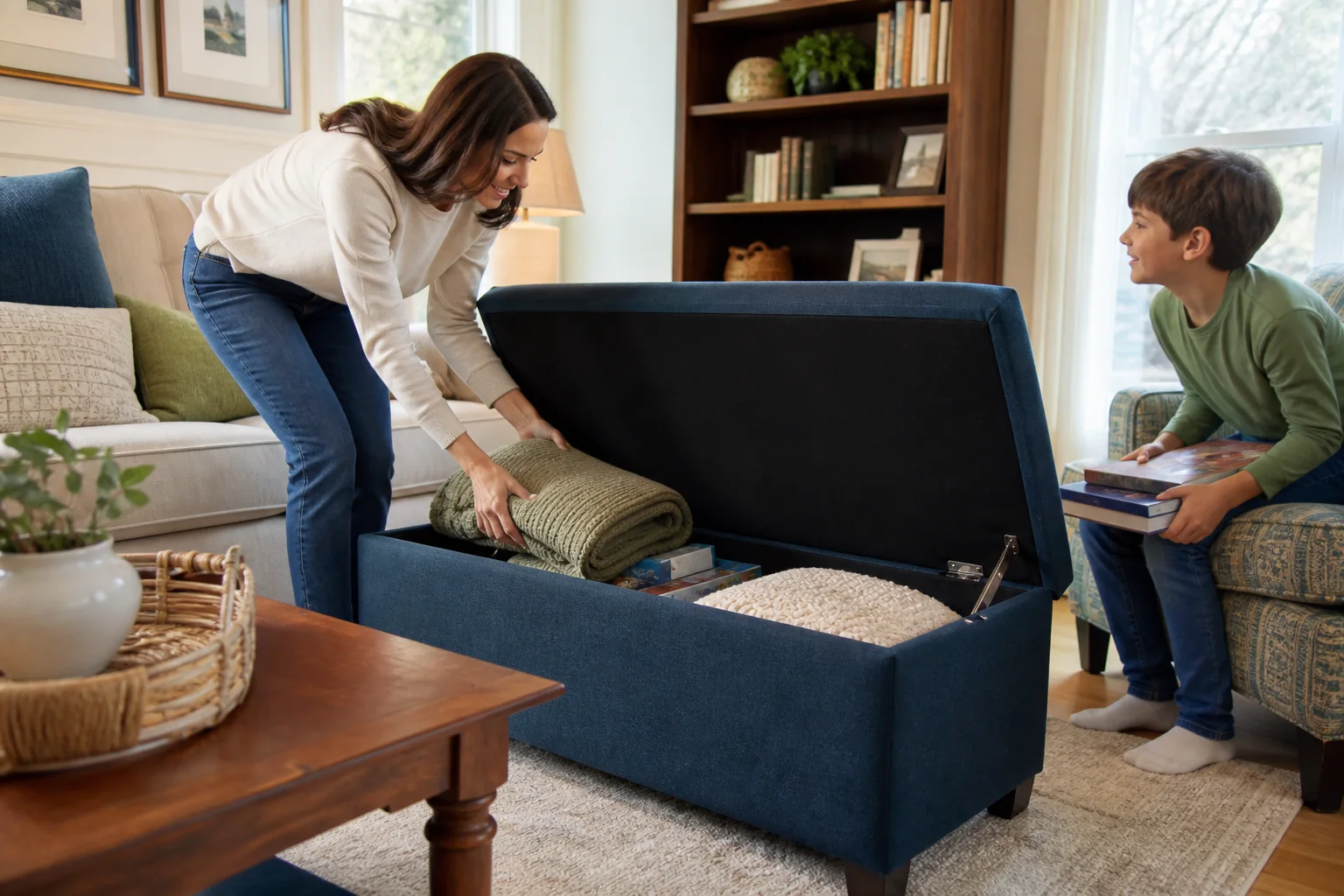
A storage ottoman can serve as a footrest, a soft-edged coffee table, occasional seating, and a home for blankets. Those jobs place different demands on the frame. A piece suitable for resting feet is not automatically designed to support a seated adult, and a plush tufted lid may be awkward under a drink tray.
The most successful ottoman starts with one primary role and one storage category. Blankets, board games, or children's toys each require different interior dimensions and cleaning access. When everything miscellaneous is dropped inside, the lid may close, but the room has not become more organized.
The Living Room Reset
At the end of a weeknight, a family wants to clear two throws, a game, and the child's soft toys before guests arrive. A large ottoman can hold all of it, but retrieving the game tomorrow may require unloading the entire cavity. If the lid is heavy, a child may also struggle with it.
A medium bench-style ottoman with a stay-open hinge and two lightweight interior bins creates safer, more visible categories. A tray can turn the flat top into a temporary table after the lid is closed. The storage is still flexible, but each object has a reason to be there.
Define What the Top Must Do
For a footrest, compare height with the sofa seat and leave comfortable legroom. For occasional seating, the product must explicitly support that use and provide appropriate load information. For a coffee-table substitute, a firm level top works with a broad tray; deep button tufting may look inviting but creates unstable valleys for objects.
Check the full footprint with circulation around it. A long bench can sit against a wall or at the foot of a bed, while a cube moves easily beside an armchair. Round designs soften a narrow route but may use interior volume less efficiently. Mark the piece on the floor and mimic opening the lid before ordering.
- Match height to the sofa or bed where the ottoman will sit.
- Verify that any intended seating use is explicitly supported.
- Use a stable tray rather than placing drinks on upholstery.
Inspect the Lid and Hinges
Lift-off lids provide a wide opening and can sometimes be flipped into a tray surface, but they need a clear landing spot whenever the ottoman is accessed. Hinged lids remain attached and are quicker for daily use. A stay-open or soft-closing mechanism can reduce slamming, though no mechanism replaces supervision around children.
Pull tabs, recessed handles, and edge clearance improve control. Covered hinges protect stored blankets, and flat-packed pieces need accurate hinge alignment and fastener installation.
- Choose lift-off lids only when there is room to set them down.
- Look for a controlled opening path and protected hardware.
- Follow assembly and child-safety directions exactly.
Size the Interior Around One Category
Exterior dimensions can overstate storage because padding, frame rails, hinges, and feet consume space. Compare internal width, depth, and height with the folded blanket, game box, or bin intended to go inside. Shallow interiors keep small objects visible; deep cavities suit bulky textiles but benefit from dividers or handled baskets.
Avoid sealing damp fabric or recently worn shoes inside upholstered storage. Ventilate and clean items first, then follow material-care guidance. A washable liner or removable bins can protect the interior from crumbs and toy dust. Schedule a quick monthly edit so the ottoman does not become the last stop for objects no one wants to sort.
- Compare published interior dimensions, not only outside size.
- Use light bins to separate categories in a deep cavity.
- Store clean, dry items and leave a little free space.
A quick before-you-buy checklist
- Choose the primary use: footrest, table, storage, or supported seating.
- Measure the footprint, lid swing, and nearby walking clearance.
- Verify load guidance for every intended use.
- Compare internal dimensions with the exact items to store.
- Inspect lid control, handles, hinges, and finger clearances.
- Read upholstery cleaning instructions and request a swatch.
- Use bins and regular edits to prevent a clutter cavity.
The bottom line
Define what the top must support, verify the structure, and size the interior around one category. Safe lid operation and cleanable upholstery make the ottoman useful every day.
Frequently asked questions
Can every storage ottoman be used as a seat?
No. Some are designed only for storage or light foot support. Use an ottoman as seating only when the maker explicitly lists that purpose and provides appropriate load and assembly guidance. Folding fabric models and rigid framed pieces may have very different capabilities.
What is best to store inside an ottoman?
Clean, dry, frequently used soft goods, games, or lightweight toys are practical choices when they fit the interior. Avoid damp items, food, and anything that can damage upholstery. One or two defined categories make retrieval easier than a mixture of miscellaneous clutter.
Is a hinged lid better than a removable lid?
A hinged lid is convenient for frequent access and does not need a landing spot, while a removable lid can offer a wide opening or reversible tray. Compare wall clearance, lid weight, hinge control, and who will use it before deciding.
More in Small-Space Solutions
More guides you'll use

How to Choose an Apartment Sofa That Fits the Door
Measure the entire delivery path and choose useful seating proportions before falling for a sofa that cannot make the turn.
Read the guide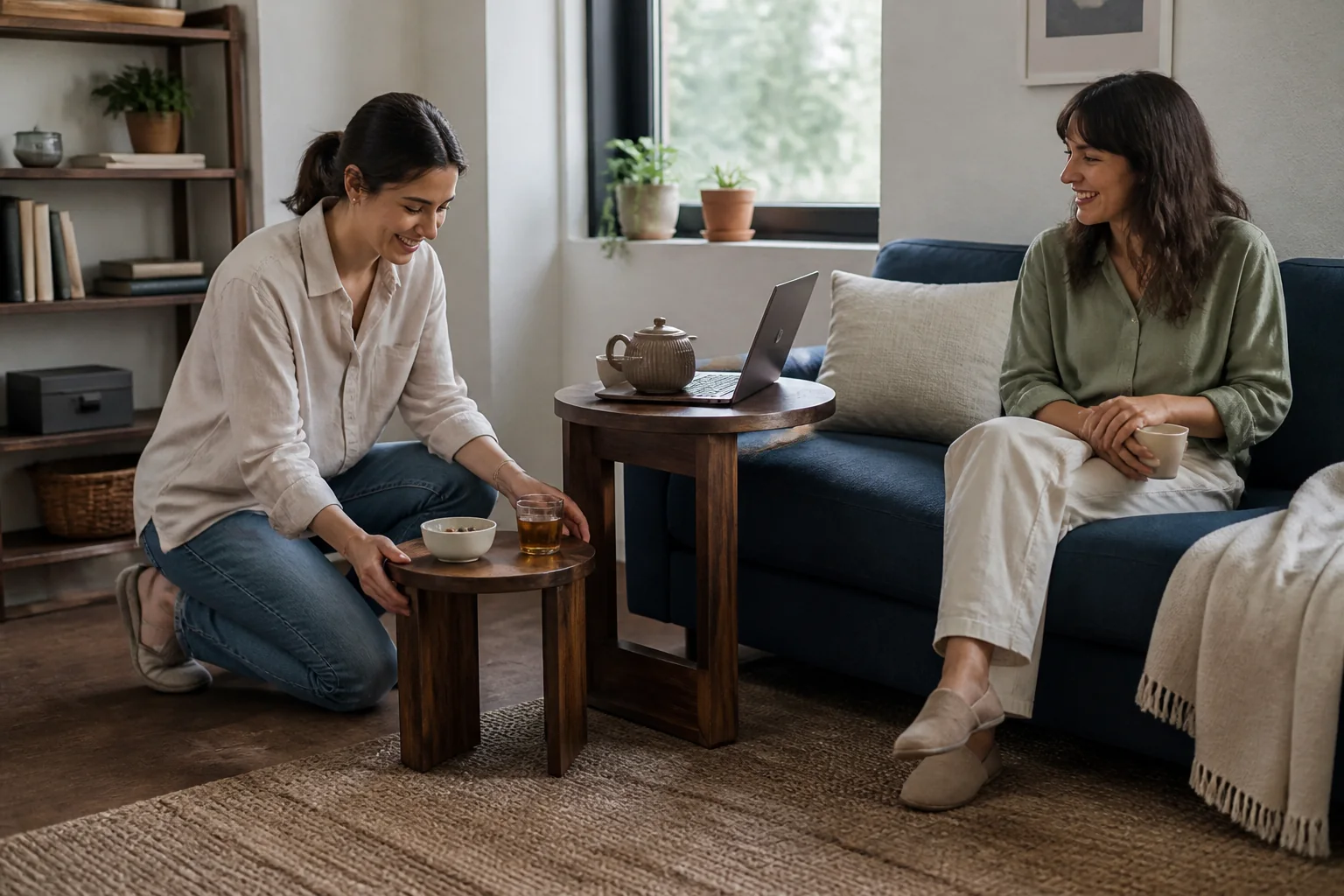
Nesting Tables That Earn Their Floor Space
Pick nesting tables that separate when guests arrive and tuck away without wobbling, scratching, or wasting room.
Read the guide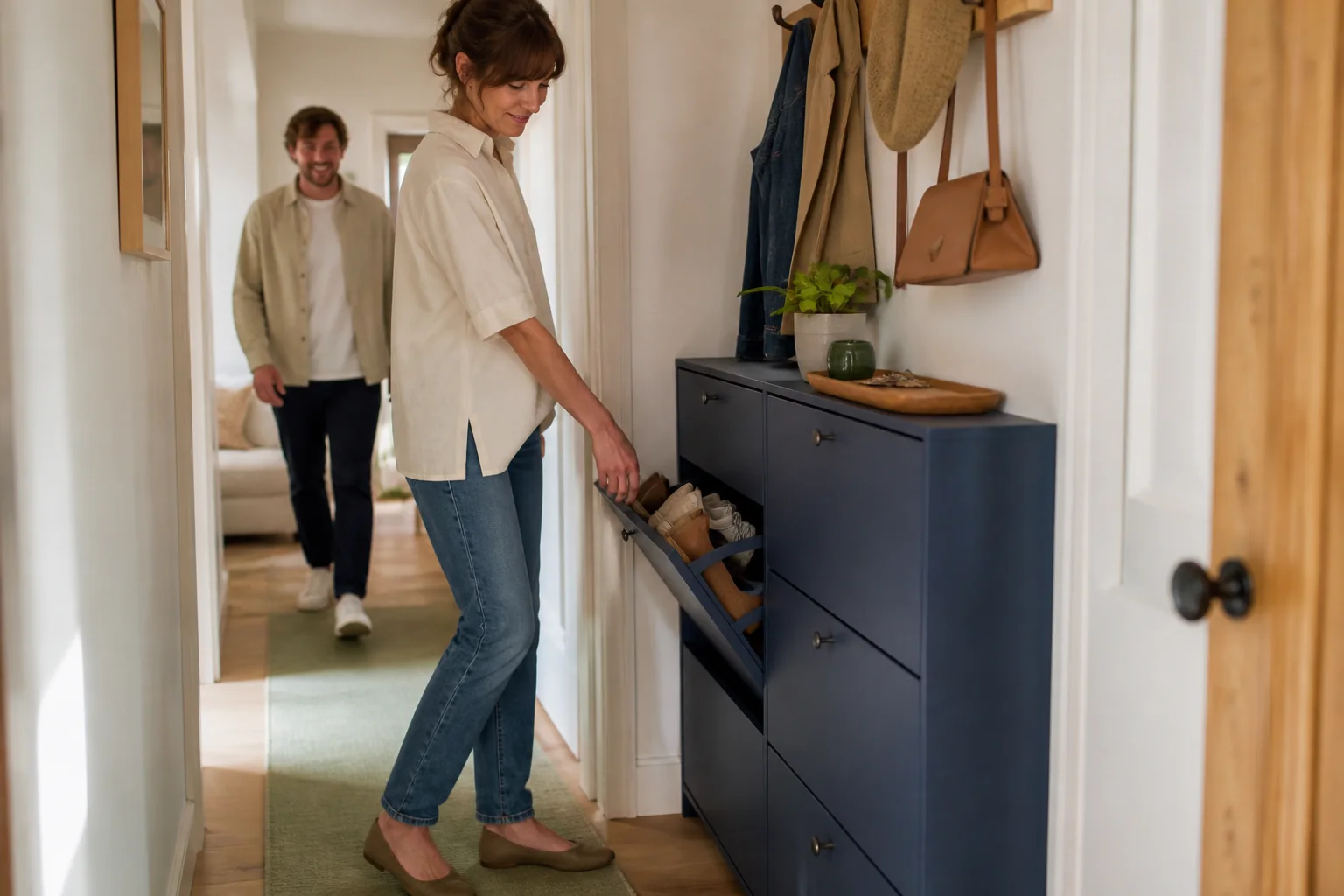
Shoe Storage for a Narrow Hall or Closet
Keep everyday footwear accessible without narrowing the path, hiding every pair, or creating a difficult-to-clean pile.
Read the guide