
How to Choose an Apartment Sofa That Fits the Door
Measure the entire delivery path and choose useful seating proportions before falling for a sofa that cannot make the turn.
Shopping disclosure: Well1566 Home may earn a commission from qualifying purchases made through marked links, at no extra cost to you. Recommendations are based on use cases and published details; we do not claim hands-on use unless an article explicitly documents it. Read our full disclosure.

A sofa can fit beautifully on a floor plan and still fail at the building entrance. Apartment shopping requires two sets of measurements: the place where the sofa will live and every doorway, hall, elevator, stair turn, and ceiling pinch point along the way. Delivery access is part of the product specification.
Once access is confirmed, proportion matters more than an apartment-size label. Seat depth, arm width, back height, and cushion structure determine footprint and feel. A compact exterior with generous usable seating beats a bulky silhouette shortened for one wall.
The Third-Floor Turn
A renter measures the living-room wall and orders a two-seat sofa with room to spare. On delivery day, the box clears the lobby but cannot rotate at the final stair landing because the ceiling slopes and the apartment door opens inward. The listed sofa width never described that turn.
A better plan traces the route with the packaged dimensions, including the narrowest width and diagonal possibilities allowed by the product. Removable feet or a modular frame might make the difference, but only when the manufacturer confirms how the piece is designed to travel and assemble.
Measure the Route, Not Just the Room
Record clear opening width and height for the building door, elevator, stairwell, hallway, and apartment door. Door handles, radiators, light fixtures, railings, and inward swings reduce usable space. For stairs, note landing depth, ceiling height, and the tightest turning point. Measure twice and compare with packaged and assembled product dimensions.
Ask the seller whether feet, arms, or backs are removable and whether disassembly is intended for delivery. Do not assume a delivery crew can modify furniture safely. Flat-pack and modular sofas reduce access risk because components travel separately, but confirm the largest individual box. Review failed-delivery and return policies, including who pays when access measurements are wrong.
- Measure clear openings after accounting for trim and hardware.
- Compare the largest package with elevator and landing dimensions.
- Photograph tight turns so a delivery service can assess them.
Protect Walking Space
Use painter's tape to mark the sofa footprint on the floor, including chaise sections and side tables. Then walk the room as usual. Can the door open, can someone reach the window, and is there a natural route from entry to kitchen? A few inches saved on wide arms can create more useful seating without shrinking the seat itself.
Raised legs reveal more floor and ease cleaning, while a skirted base has more visual mass. A lower back may preserve an open-plan sightline, but circulation comes first.
- Tape the full footprint and leave it down for a normal evening.
- Count usable seat width between the arms.
- Check vacuum, outlet, window, and curtain access.
Choose Cushions and Fabric for Daily Life
Seat depth should match how people actually sit. Upright sitters may prefer shallower seats, while loungers may want more depth; shorter users can add a supportive pillow, but an excessively deep sofa can remain awkward. Attached cushions stay orderly, whereas loose cushions can be rotated and aired. Ask what regular reshaping the fill needs.
For a household with pets, children, or frequent takeout, removable cushion covers and cleanable upholstery can be valuable. Read the specific care code and request a swatch when available. Color samples on a screen can mislead, and fabric texture may catch pet hair differently. Consider replacement parts and cushion covers if the sofa is expected to move through several apartments.
- Compare seat height and depth with a chair you already find comfortable.
- Request upholstery samples and read the exact cleaning directions.
- Check whether covers, feet, or modules can be replaced separately.
A quick before-you-buy checklist
- Measure every clear doorway, landing, stair, hall, and elevator.
- Record both packaged and assembled furniture dimensions.
- Tape the sofa footprint and preserve normal walking paths.
- Compare usable seat width, height, and depth.
- Read upholstery care and request a fabric swatch.
- Review delivery, assembly, failed-access, and return terms.
- Save instructions and hardware for the next move.
The bottom line
Map the entire delivery path, protect circulation, and compare usable seating rather than exterior bulk. The right apartment sofa fits the building, daily sitting, and a future move.
Frequently asked questions
How do I know whether a sofa will fit through a doorway?
Compare the sofa's packaged and assembled width, height, depth, and relevant diagonal with the clear doorway dimensions. Account for door swing, handles, trim, and space to rotate on both sides. Ask the seller for delivery guidance when dimensions are close; do not rely on width alone.
Is a loveseat always best for a small apartment?
Not always. Some loveseats use wide arms and offer little interior seating, while a compact sofa with slim arms may seat more people in a similar footprint. Measure usable seat width and preserve walking clearance rather than buying by category name.
Are modular sofas easier to move?
Often, because individual sections or boxes are smaller than a one-piece frame. Still, the largest module must clear the route, and connectors should be secure for daily use. Check assembly requirements, module weights, packaging, and whether the system can be disassembled again without damage.
More in Small-Space Solutions
More guides you'll use
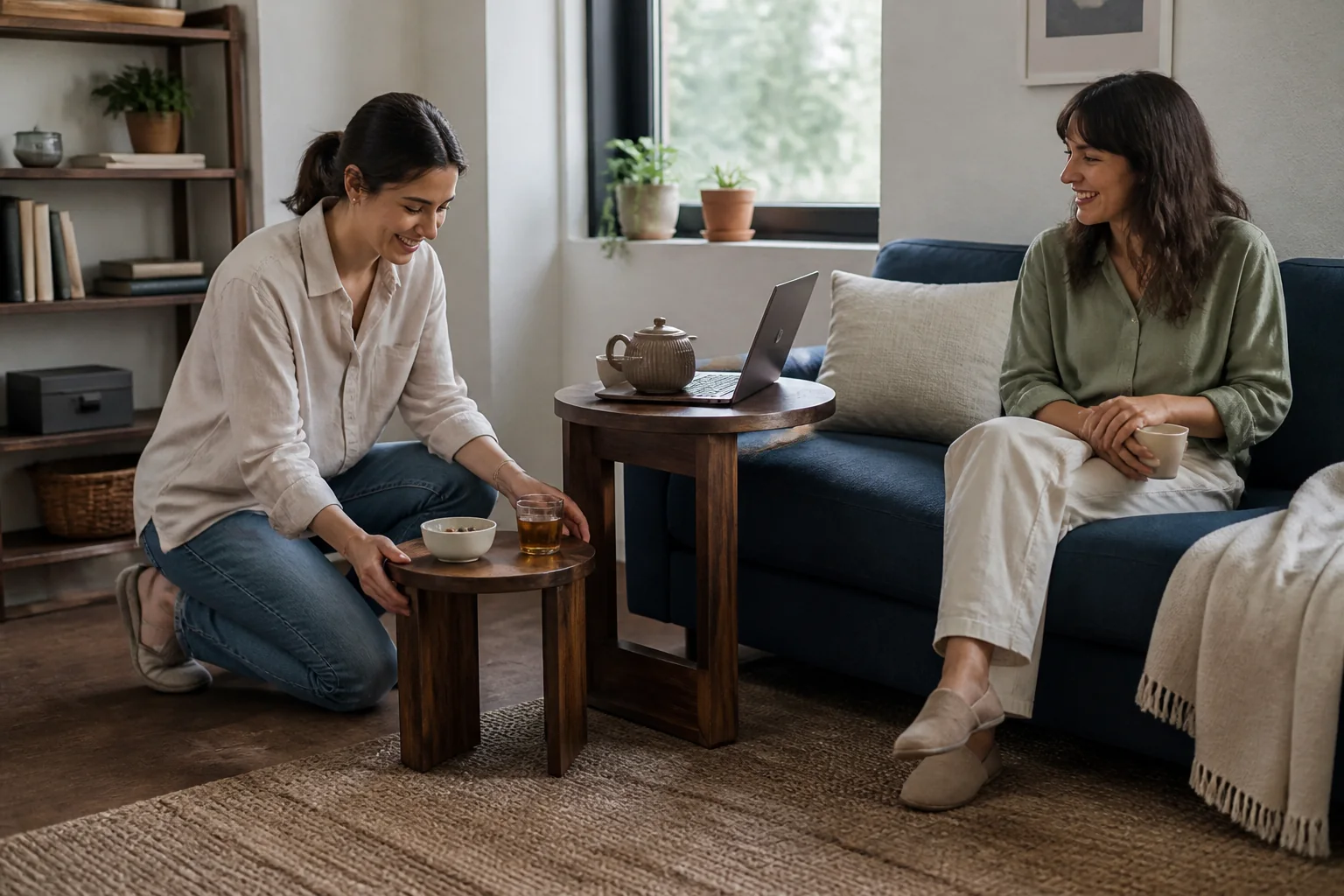
Nesting Tables That Earn Their Floor Space
Pick nesting tables that separate when guests arrive and tuck away without wobbling, scratching, or wasting room.
Read the guide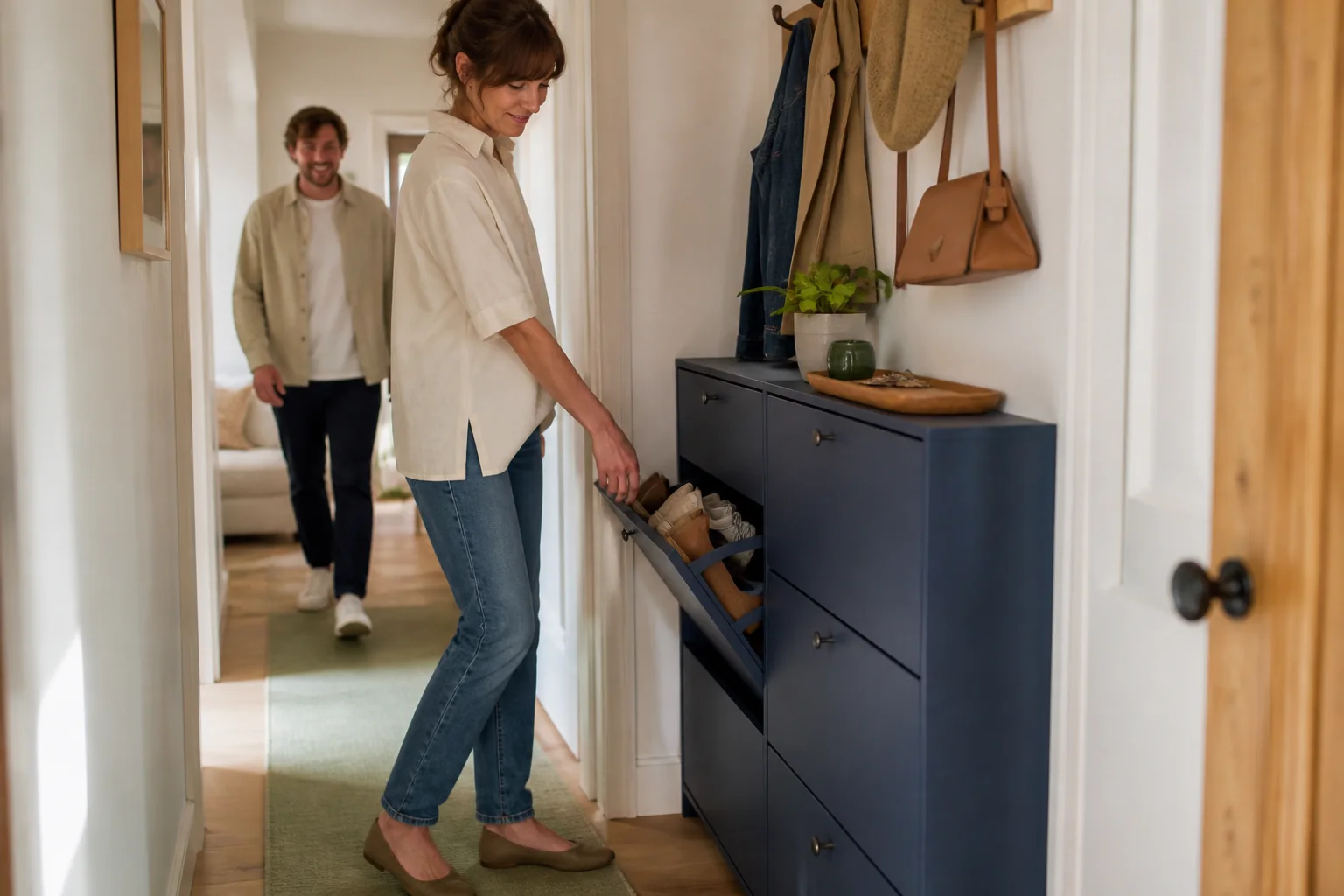
Shoe Storage for a Narrow Hall or Closet
Keep everyday footwear accessible without narrowing the path, hiding every pair, or creating a difficult-to-clean pile.
Read the guide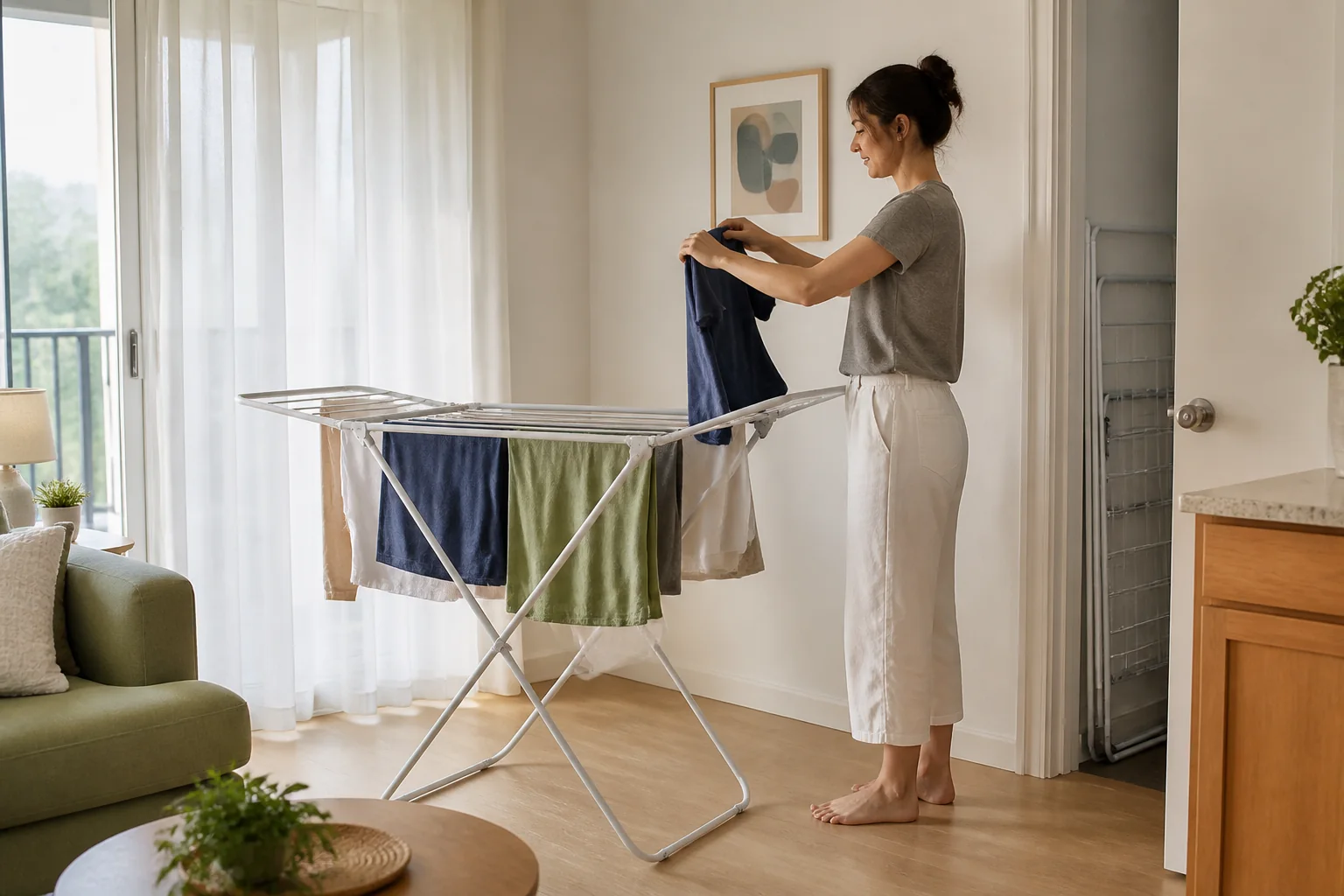
Folding Drying Racks for Apartment Laundry Days
Find a rack that holds a realistic wash load, lets air circulate, and folds away without dominating the apartment.
Read the guide