
Nesting Tables That Earn Their Floor Space
Pick nesting tables that separate when guests arrive and tuck away without wobbling, scratching, or wasting room.
Shopping disclosure: Well1566 Home may earn a commission from qualifying purchases made through marked links, at no extra cost to you. Recommendations are based on use cases and published details; we do not claim hands-on use unless an article explicitly documents it. Read our full disclosure.

Nesting tables promise two or three surfaces in the footprint of one, which sounds ideal for a small living room. The idea works only when the tables slide together smoothly, remain stable when separated, and sit at useful heights beside the sofa. A decorative stack that is awkward to lift or too delicate for a mug has not truly saved space.
Good nesting tables respond to changing moments. They can flank a sofa when friends visit, support a laptop for a short task, or combine as a tiered display, then return to one compact zone. Buying well means matching their dimensions and materials to those specific jobs rather than choosing an attractive silhouette in isolation.
Four Guests, One Coffee Table
In a studio apartment, two friends arrive with takeout and another pair joins later. The fixed coffee table holds dinner containers, leaving nowhere for glasses near the ends of the sofa. Two nested side tables can be pulled apart and placed where people actually sit, then stacked again before the morning exercise mat comes out.
That flexibility depends on clear floor space under and around the furniture. The smallest table must be easy to grip, and neither table should catch on the rug edge. Measuring sofa arm height and testing the proposed footprints with cardboard reveals whether the set will help or become a daily obstacle.
Measure Both the Nested and Open Layouts
Product dimensions often highlight the largest table, but every piece matters. Record the width, depth, and height of the full stack, then plot each table in the positions where it might be used. A round set moves easily around seating, while square or rectangular tops may align more efficiently with a wall or sofa arm.
Check the clearance that lets one table slide beneath another. Thick rugs reduce the opening; furniture bases may also interfere. Leave enough walking room with all pieces deployed.
- Map each separate table with paper or cardboard templates.
- Compare tabletop height with the sofa seat and arms.
- Account for rug pile beneath the nesting clearance.
Inspect Stability and Materials
A narrow table can become top-heavy, especially on carpet. A broad base, cross braces, level feet, and a sensible relationship between top size and height improve confidence. Adjustable feet can correct minor floor unevenness and protect hard surfaces, while continuous sled bases may spread weight better on rugs.
Materials change weight and care. Solid wood can be repairable but may move with humidity; veneered or engineered surfaces can be consistent yet vulnerable at damaged edges. Metal frames offer slim profiles, and glass keeps sightlines open but shows fingerprints and requires cautious handling. Read load guidance and use coasters rather than assuming every surface tolerates heat or moisture.
- Look for levelers or floor pads appropriate to your flooring.
- Check frame joints and cross supports in product images.
- Match surface care to drinks, plants, or daily laptop use.
Choose Shapes That Are Easy to Live Around
Rounded corners are forgiving in tight paths and homes with energetic pets or children, although no table replaces sensible supervision. Straight-edged tables fit neatly against walls and offer more usable corner area. Mixed heights can create an attractive layered surface, but the lowest table still needs to be tall enough for its intended job.
Make sure one person can separate and restack the set. Open frames and finger clearance help; pieces that must be carefully threaded together may rarely leave the stack.
- Favor rounded profiles where the walking path passes close by.
- Check for a comfortable grip point on the smaller table.
- Make sure every piece looks finished from all visible sides.
A quick before-you-buy checklist
- Measure every table both nested and in its likely open position.
- Compare heights with sofa seats, arms, and laptop use.
- Check rug clearance and the path between furniture.
- Look for a stable base, sound joints, and floor-safe feet.
- Choose a surface compatible with drinks and normal cleaning.
- Confirm one person can separate and restack the tables easily.
The bottom line
Map every footprint, match table height to its tasks, and inspect the bases. A useful set moves comfortably, remains stable, and nests neatly when open space matters.
Frequently asked questions
Can nesting tables replace a coffee table?
They can in a small room when their combined surface meets daily needs. Separate tables are flexible for drinks and guests, but they may not provide one broad surface for games or serving trays. Map routine objects before deciding whether the modular approach is sufficient.
What height should nesting tables be beside a sofa?
A useful side table generally places the top near a comfortable reach from the seat, but sofa arms and user preference vary. Measure a surface you already like, compare every table in the set, and remember that the smallest nested piece will be lower.
Are three nesting tables better than two?
Only if the third surface has a real job and the combined stack still fits. More pieces add flexibility for entertaining but also add weight, legs, and potential clutter. In many small rooms, a well-proportioned pair is easier to move and store.
More in Small-Space Solutions
More guides you'll use

How to Choose an Apartment Sofa That Fits the Door
Measure the entire delivery path and choose useful seating proportions before falling for a sofa that cannot make the turn.
Read the guide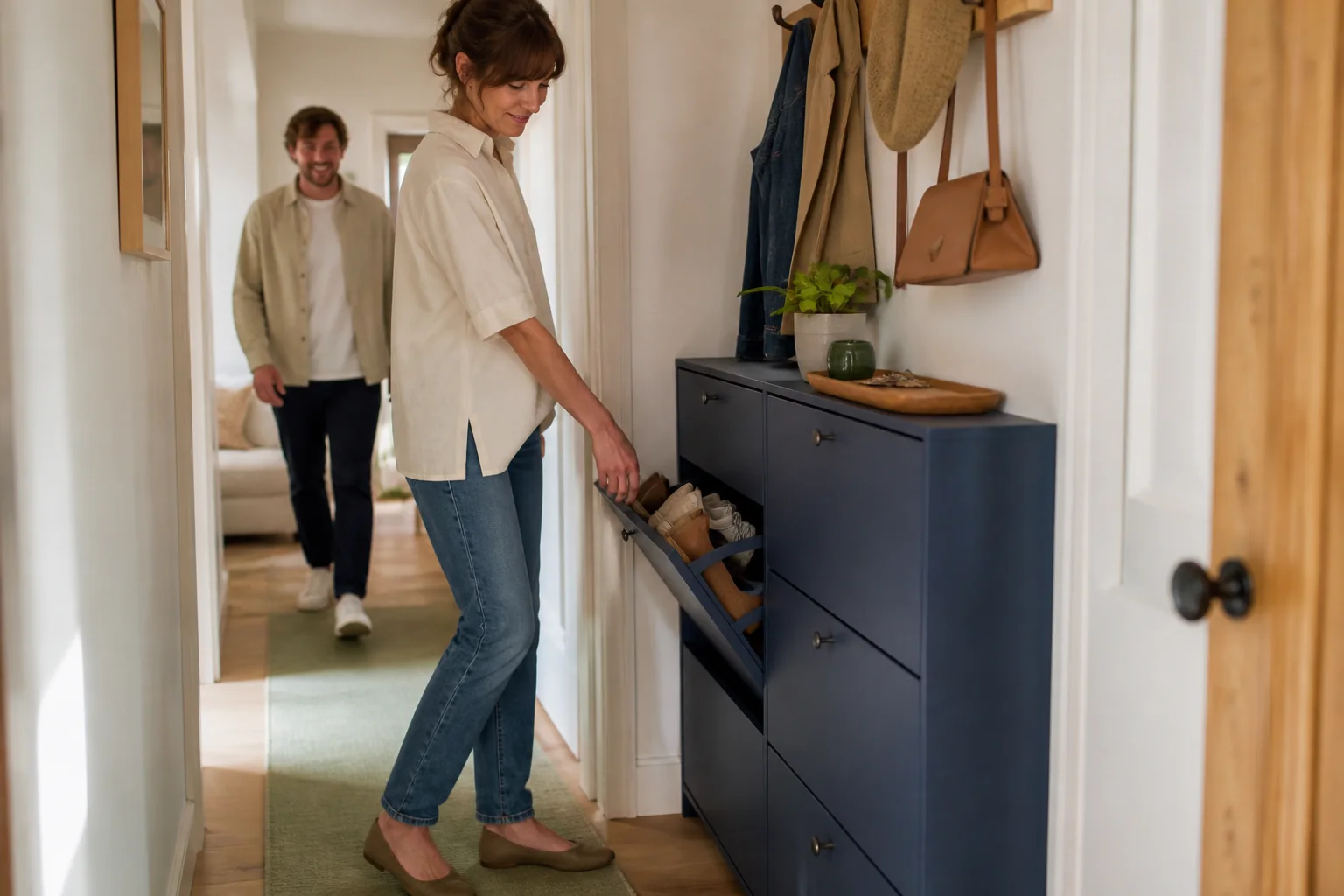
Shoe Storage for a Narrow Hall or Closet
Keep everyday footwear accessible without narrowing the path, hiding every pair, or creating a difficult-to-clean pile.
Read the guide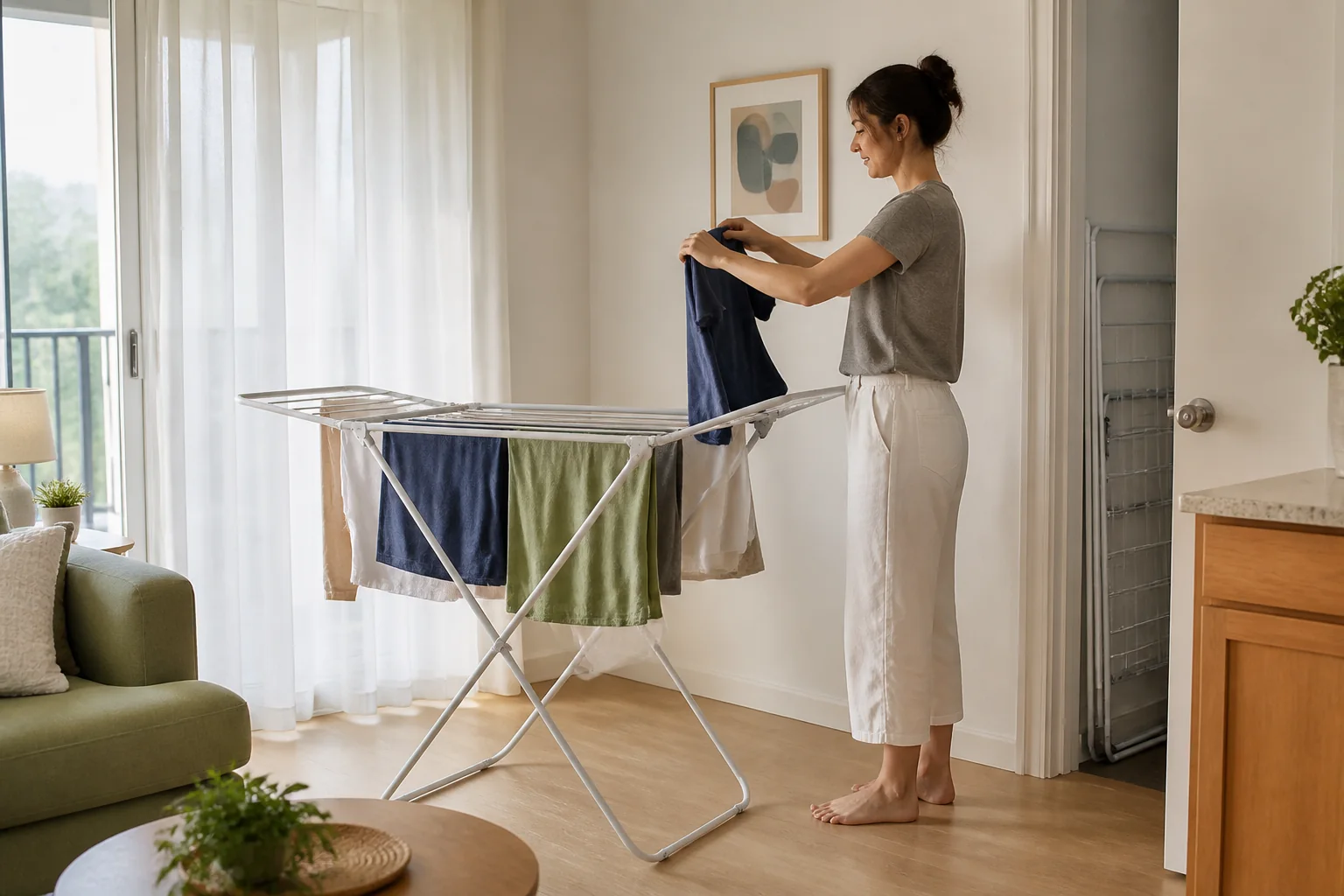
Folding Drying Racks for Apartment Laundry Days
Find a rack that holds a realistic wash load, lets air circulate, and folds away without dominating the apartment.
Read the guide