
Folding Drying Racks for Apartment Laundry Days
Find a rack that holds a realistic wash load, lets air circulate, and folds away without dominating the apartment.
Shopping disclosure: Well1566 Home may earn a commission from qualifying purchases made through marked links, at no extra cost to you. Recommendations are based on use cases and published details; we do not claim hands-on use unless an article explicitly documents it. Read our full disclosure.
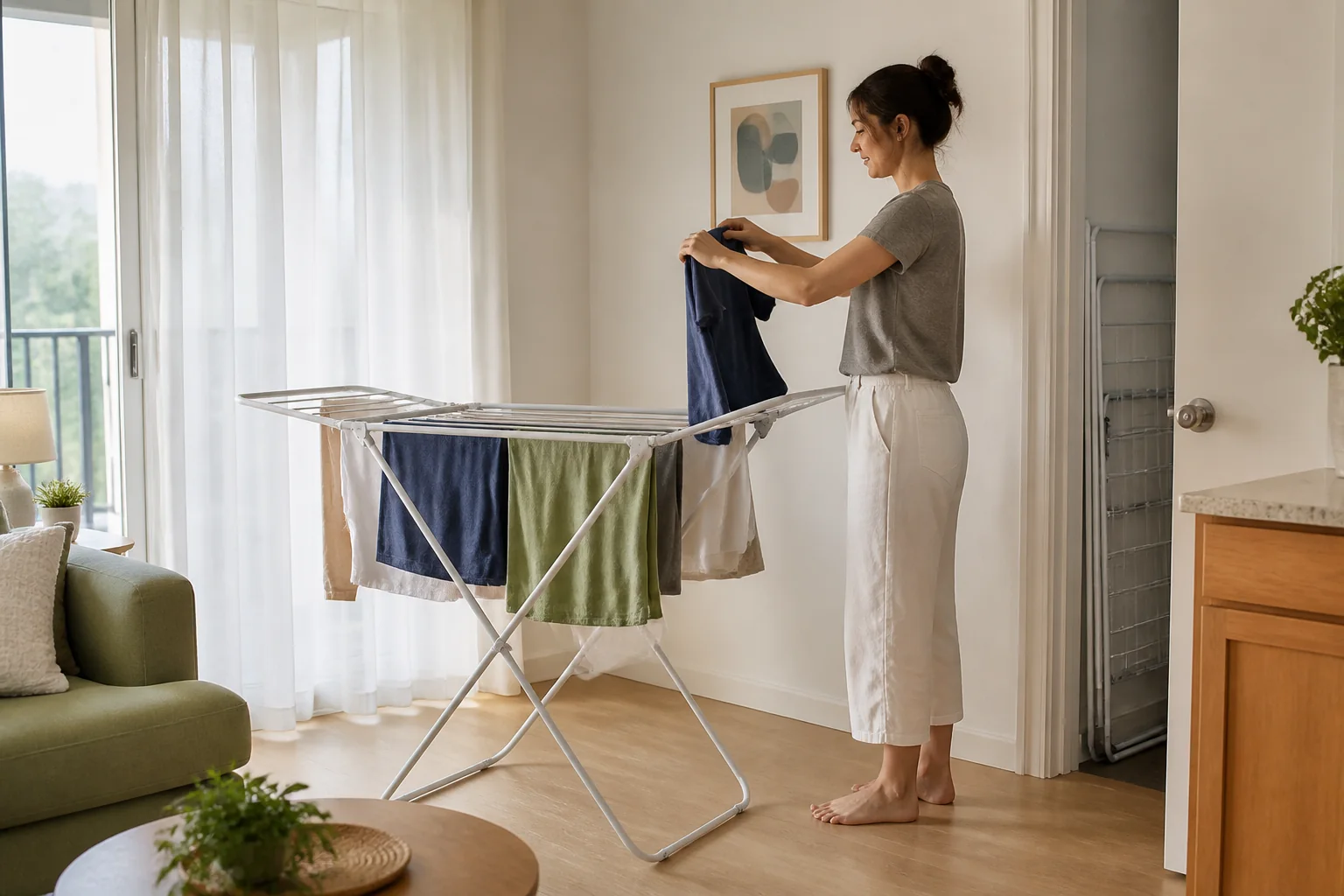
Air-drying can handle workout clothing, shirts, cloths, and items whose care label discourages machine drying. In an apartment, damp fabric needs air without blocking the walkway or becoming permanent living-room decor.
A folding rack succeeds when its open shape fits, its rails hold a normal load, and its closed form has a storage home. Stability and spacing matter more than an impressive bar count.
Laundry Between Dinner and Morning
A renter finishes a mixed load after dinner. Several shirts need hangers, workout leggings need space between layers, and a sweater should dry flat. The bathroom is too humid, and a wide winged rack would block the kitchen route until morning.
A vertical tower rack beside a cracked window might use less floor area, but the sweater still needs a mesh shelf. Alternatively, a compact winged rack can open only one side and sit in a ventilated bedroom corner. Listing garment types before shopping reveals which configuration offers usable capacity rather than simply the most rails.
Choose a Shape for the Drying Zone
Accordion racks are simple, often stable, and useful for towels or small items, but lower rails can have limited clearance. Winged racks provide long spans and adjustable sections for varied garments, though they claim more floor area. Tower designs build upward and may fit narrow corners, but closely stacked tiers can slow airflow if overloaded.
Measure the rack fully open, including garments over the edges. Tape the footprint and open nearby doors. Do not obstruct exits, heaters, cooking areas, or bathroom access. Use a balcony only when the product and conditions are suitable, and never leave a light rack exposed to wind.
- Measure the widest hanging garment, not only the metal frame.
- Keep damp laundry away from heat sources and cooking splatter.
- Choose a location with airflow and a floor that tolerates occasional drips.
Match Rails to the Load
Think in garment types. Shirts dry well on hangers if the rack has a high bar or hanger slots; socks need clips or closely spaced rails; knitwear benefits from a flat breathable shelf. Towels require enough vertical separation to avoid folding several wet layers together. A small rack can outperform a crowded large one when the load is edited and spaced properly.
Check stated load guidance and how weight is distributed. Wet fabric is heavier than dry fabric, so place heavier pieces low and balanced across both sides. Rails should feel smooth to protect delicate knits, and plastic caps should cover exposed ends. If household laundry includes long dresses or sheets, confirm clear drop height instead of assuming any rack can handle them.
- Count long-hang, flat-dry, clipped, and draped items separately.
- Spread weight symmetrically and respect the maker's load limit.
- Leave air gaps rather than using every rail in a dense cluster.
Inspect Folding Hardware and Storage
A folding mechanism will be used every laundry day. Look for hinges that lock clearly, feet that sit flat, and joints positioned away from fingers during setup. Wheels help a tall rack move, but they should lock once it is loaded. Rust-resistant finishes are useful around damp fabric, though the rack still needs to dry before storage.
Measure the folded thickness and height against the exact closet slot, behind-door gap, or wall hook you plan to use. Freestanding folded racks can slide or tip, so follow storage instructions. A wall-mounted retractable rack saves floor space but transfers the challenge to secure installation and adequate wall clearance, which renters should approve first.
- Practice the described locking and folding sequence before loading.
- Confirm the folded rack has a stable, dry storage position.
- Wipe rails and let the frame dry before putting it away.
A quick before-you-buy checklist
- Sort the usual load into drape, hanger, clip, and flat-dry items.
- Measure the complete open footprint with garments overhanging.
- Keep the drying zone clear of exits, heaters, and cooking areas.
- Check rail spacing, long-garment clearance, and load guidance.
- Look for secure locks, smooth rails, and stable feet.
- Measure the folded rack against its planned storage spot.
- Leave airflow between garments rather than packing every bar.
The bottom line
Size the rack for a realistic load and its storage home. Useful rail spacing, airflow, and a stable locking frame matter more than maximum theoretical capacity.
Frequently asked questions
Which drying-rack style holds the most clothes?
Tower racks offer many rails in a small footprint, while wide winged racks often provide better clearance for mixed garments. Usable capacity depends on airflow and garment size, not just rail count. Choose the shape that lets your normal load hang without dense overlap.
Can I put a folding drying rack on a balcony?
Only if the rack is intended for that setting, building rules allow it, and weather conditions are suitable. A light rack or hanging garment can move in wind. Keep it secure, away from edges, and never treat an unattended rack as storm-safe.
How do I dry a sweater on a rack?
Follow the sweater's care label. Many knits are best reshaped and supported flat on a breathable mesh surface rather than hung, which can stretch them. Distribute the garment evenly, allow air underneath, and avoid placing it directly on a heat source.
More in Small-Space Solutions
More guides you'll use

How to Choose an Apartment Sofa That Fits the Door
Measure the entire delivery path and choose useful seating proportions before falling for a sofa that cannot make the turn.
Read the guide
Nesting Tables That Earn Their Floor Space
Pick nesting tables that separate when guests arrive and tuck away without wobbling, scratching, or wasting room.
Read the guide
Shoe Storage for a Narrow Hall or Closet
Keep everyday footwear accessible without narrowing the path, hiding every pair, or creating a difficult-to-clean pile.
Read the guide