
A Small Kitchen Cart for Prep, Storage, and Serving
Choose a movable kitchen cart that adds a genuinely useful surface without crowding doors, appliances, or cooking paths.
Shopping disclosure: Well1566 Home may earn a commission from qualifying purchases made through marked links, at no extra cost to you. Recommendations are based on use cases and published details; we do not claim hands-on use unless an article explicitly documents it. Read our full disclosure.
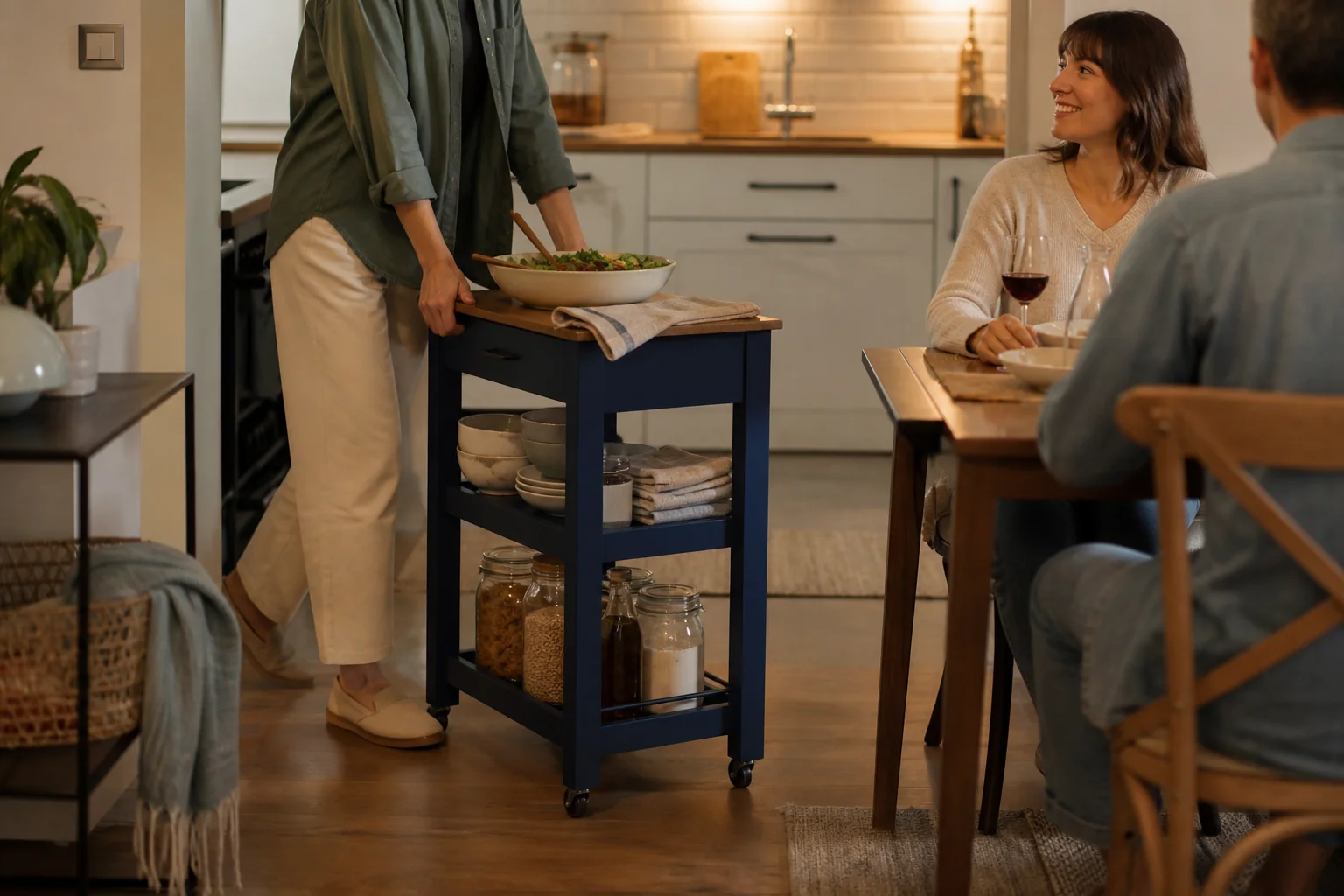
A kitchen cart can add the few square feet of surface that a compact kitchen lacks, but it also becomes another object in a busy route. Its value depends on where it parks, how smoothly it moves, what the top can handle, and whether the shelves store items used near that exact spot.
Identify one primary job. A prep cart needs stable work height; a pantry cart needs shelf clearance; a serving cart must clear thresholds. Designs that claim to do everything often compromise.
Dinner in a One-Counter Kitchen
A cook is chopping vegetables while the only fixed counter also holds a dish rack and coffee maker. The cutting board is pushed close to the sink, and ingredients migrate to the stovetop before it has cooled. A narrow cart parked at the end of the cabinet run could create a dedicated prep landing zone.
For that scenario, the top must sit at a comfortable height, wheels must lock firmly, and the cart must leave appliance doors and the kitchen exit clear. Frequently used bowls can live below, but heavy equipment belongs on a lower shelf. Measuring an ordinary dinner-prep sequence is more revealing than admiring a staged cart filled with decor.
Map the Cart in Motion and at Rest
Measure the parking footprint and the route to any second location. Include handles, towel bars, hooks, and objects that overhang shelves. Mark the full size on the floor, then open the refrigerator, oven, dishwasher, drawers, and nearby doors. The cart should not become an obstacle during an urgent cooking movement.
Wheel quality matters when a cart truly travels. Larger wheels cross small thresholds more easily, while all-direction casters improve turning in tight rooms. At least two reliable locks can help stabilize the frame, but a wheeled cart is not the place for forceful chopping if it still shifts. A stationary narrow island may be safer when mobility is unnecessary.
- Tape the footprint including handles and accessory rails.
- Test every appliance and cabinet door around the parking zone.
- Choose wheels for the actual flooring and thresholds.
Select the Work Surface Carefully
Wood tops feel warm and can suit light prep, but they require care and should not be assumed to be cutting boards. Stainless-style tops clean readily and tolerate many kitchen tasks, though they show marks and can sound lively when items are set down. Engineered surfaces vary; read manufacturer guidance for heat, stains, cutting, and food contact.
Use separate cutting boards and trivets unless instructed otherwise. Inspect how seams wipe clean and compare work height with a counter you already use comfortably.
- Read the exact surface-care and heat guidance.
- Compare top height with your posture during prep.
- Favor an uninterrupted surface when easy wiping is important.
Build Storage Around the Job
Open shelves keep bowls and small appliances accessible but expose them to cooking dust and splatter. Closed drawers contain utensils, though shallow units can limit usable space. Wire baskets ventilate produce only when the food itself is appropriate for that storage method. Adjustable shelves make the cart more adaptable after kitchen routines change.
Put heavy items low to reduce top-heaviness, and stay within the listed loads for the top, shelves, and drawers. Rails can stop jars from sliding when the cart moves. Hooks are convenient for towels or lightweight tools but widen the active footprint, so do not place sharp utensils where people brush past.
- Assign each shelf before deciding how many shelves you need.
- Store heavy appliances low and centered.
- Avoid hanging tools into the walking path.
A quick before-you-buy checklist
- Name one primary use: prep, storage, or serving.
- Measure the parked footprint and the full rolling route.
- Open every nearby appliance, cabinet, and room door.
- Compare wheel type, lock access, frame bracing, and load guidance.
- Read surface directions for heat, cutting, stains, and cleaning.
- Place heavy items low and keep hooks out of the walkway.
- Save assembly instructions and check fasteners periodically.
The bottom line
Choose a cart for one bottleneck, measure it with handles and doors included, and distribute weight safely. Good wheels and reliable locks make mobility genuinely useful.
Frequently asked questions
Can I chop directly on a kitchen cart top?
Only if the manufacturer explicitly says the surface is intended for direct cutting and provides care directions. Otherwise, use a separate stable cutting board. This protects the top, supports sanitation, and makes it easier to replace a worn work surface without replacing the cart.
How many locking wheels should a kitchen cart have?
Many carts use locks on two casters, while designs vary. What matters is that the specified locks are easy to engage and hold the assembled cart during its intended tasks. Follow the manual and avoid forceful work if the frame moves even when locked.
Is a drop-leaf cart good for a small kitchen?
It can provide occasional extra surface while keeping the parked footprint narrow. Measure the leaf both open and closed, test door clearance, and inspect the support mechanism. The leaf is useful only if it can open fully without blocking the cooking route.
More in Small-Space Solutions
More guides you'll use

How to Choose an Apartment Sofa That Fits the Door
Measure the entire delivery path and choose useful seating proportions before falling for a sofa that cannot make the turn.
Read the guide
Nesting Tables That Earn Their Floor Space
Pick nesting tables that separate when guests arrive and tuck away without wobbling, scratching, or wasting room.
Read the guide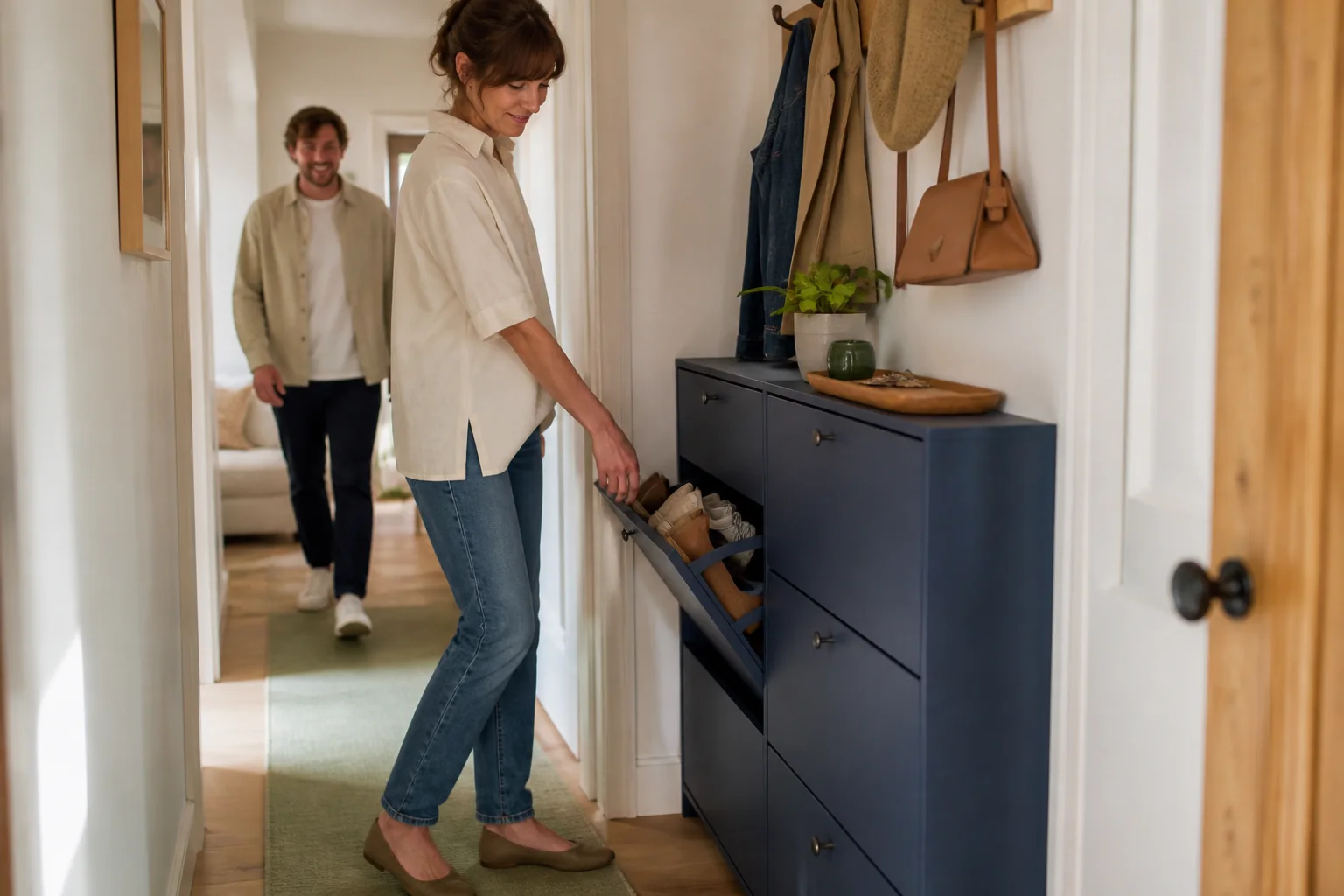
Shoe Storage for a Narrow Hall or Closet
Keep everyday footwear accessible without narrowing the path, hiding every pair, or creating a difficult-to-clean pile.
Read the guide