
Choosing a Compact Dehumidifier for Small Rooms
Size moisture control to the room, drainage routine, noise tolerance, and actual cause of dampness.
Shopping disclosure: Well1566 Home may earn a commission from qualifying purchases made through marked links, at no extra cost to you. Recommendations are based on use cases and published details; we do not claim hands-on use unless an article explicitly documents it. Read our full disclosure.
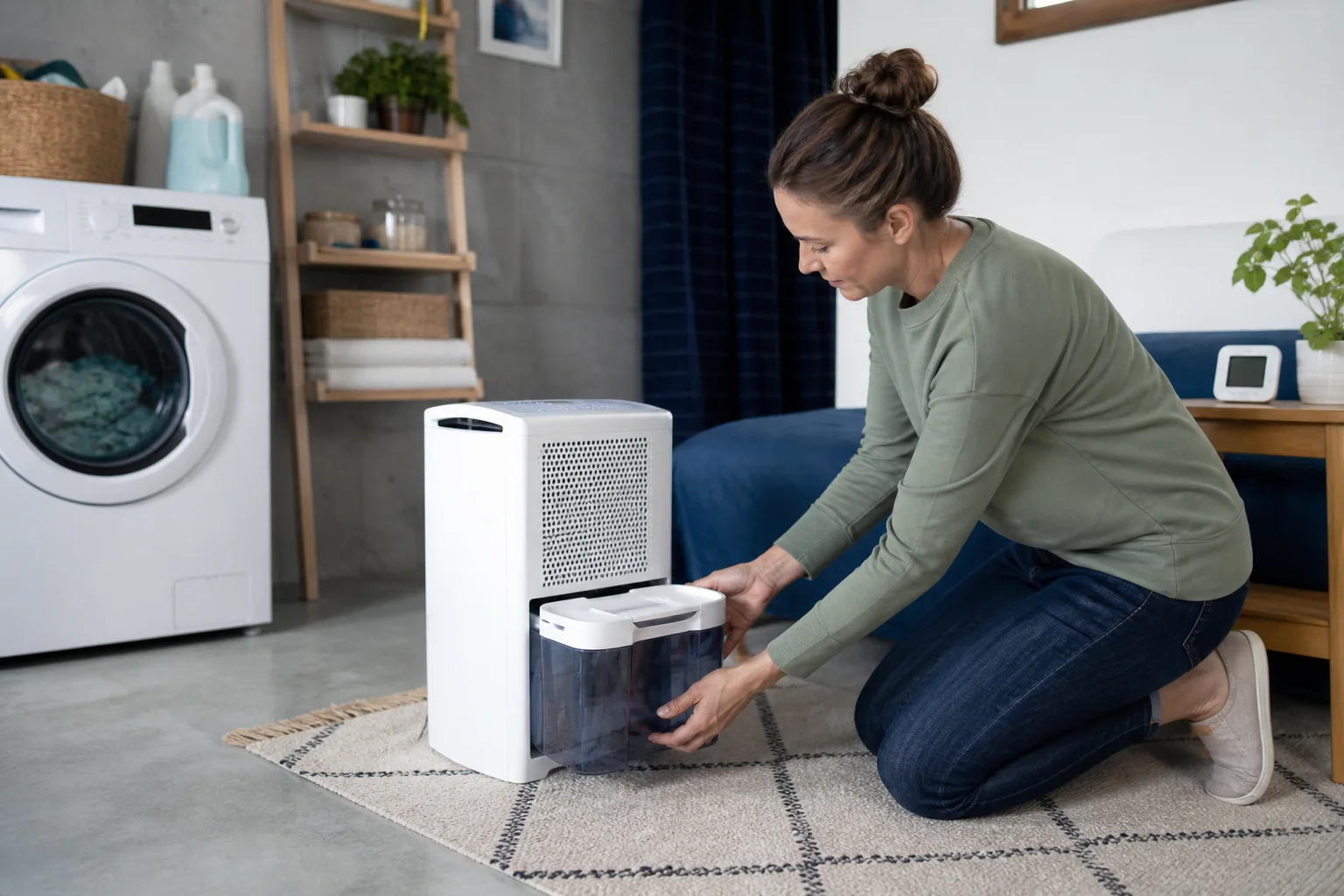
A compact dehumidifier can help manage excess moisture in a small room, but its physical size does not tell you how much water it can remove. Room temperature, starting humidity, airflow, capacity under stated test conditions, tank size, and drainage options all determine how useful the appliance will be.
It is equally important to look for the source. Leaks, water intrusion, and persistent condensation need building maintenance or professional assessment, not just an appliance placed in front of the symptom. A dehumidifier is a moisture-management tool; it is not a substitute for repair, ventilation, or qualified advice about mold and indoor-air concerns.
Laundry Night in a Small Bedroom
A renter sets a drying rack in the spare bedroom after an evening wash. By morning, the window has condensation and the room feels clammy. A tiny desktop unit looks easy to store, but its collection rate may be too modest for damp laundry and the tank could fill before the clothes dry.
The renter first checks for leaks, opens available ventilation when conditions permit, spaces garments, and measures humidity with a separate monitor. A compressor-based compact unit with automatic humidity control and a tank that can be carried without spilling may suit the recurring load better. The decision follows the moisture task, not the smallest appliance footprint.
Understand Capacity in Context
Removal capacity is reported under specified temperature and humidity conditions, so compare listings using the same standard when possible. Performance changes in cooler or less humid rooms. Thermoelectric mini units are small and often quiet but generally suited to very limited spaces and light moisture; compressor units are larger and can handle more demanding rooms, with more fan and operating noise.
Room-area claims are broad shortcuts. Consider ceiling height, closed doors, laundry, showers, outdoor climate, and how quickly moisture returns. If the room is substantially damp or spans multiple connected spaces, a very small device may run constantly without achieving the target. Avoid oversizing blindly, but be realistic about the actual water load.
- Compare extraction figures reported under equivalent conditions.
- Treat room-size marketing as a starting estimate, not a guarantee.
- Choose technology according to temperature and moisture demand.
Make Emptying and Drainage Easy
A small tank needs frequent emptying. Check its handle, splash control, and removal path; look for automatic shutoff and a clear full alert. For continuous drainage, verify whether the unit uses gravity or a pump and plan an approved, unobstructed route. Never improvise near electrical connections.
- Estimate how often the tank will need attention during normal use.
- Check that the full tank can be lifted and poured comfortably.
- Plan a secure, unobstructed drainage route if using a hose.
Account for Noise, Heat, and Placement
Fans and compressors produce sound, and most dehumidifiers release some heat into the room. Bedroom users should compare operating modes and recurring noise feedback, while remembering that published measurements may use different conditions. Automatic humidity control can reduce unnecessary running once the selected level is reached.
Place the unit on a level, dry surface with the clearances specified in its manual. Do not crowd intake or exhaust grilles behind curtains or furniture. Keep doors and windows positioned according to the operating instructions and empty the tank before moving. Filters, coils, and tanks require routine care; inaccessible parts turn a moisture appliance into another maintenance burden.
- Measure the location with the required airflow clearances included.
- Check control brightness and sleep-mode behavior for bedrooms.
- Confirm that filters and tanks can be removed without tools.
A quick before-you-buy checklist
- Check for leaks or water intrusion before buying an appliance.
- Measure room area, temperature pattern, and humidity trend.
- Compare removal capacity under equivalent stated conditions.
- Choose a tank and drainage routine you will actually maintain.
- Allow the manual's required intake and exhaust clearances.
- Consider noise, control lights, heat, and bedroom timing.
- Escalate persistent dampness to the appropriate professional.
The bottom line
Choose by moisture workload, compare capacity under like conditions, and plan drainage, noise, airflow, and cleaning. A dehumidifier supports moisture management; it cannot replace a leak repair.
Frequently asked questions
Will a tiny dehumidifier work in a bedroom?
It may help with a light moisture load in a very small room, but capacity varies greatly by technology and conditions. Measure humidity, compare stated extraction under relevant conditions, and consider whether laundry, leakage, or poor ventilation creates a demand beyond a mini unit's capability.
Do dehumidifiers make a room warmer?
Many release some heat while operating, and a compressor model may make that more noticeable in a small closed room. The amount depends on the unit and conditions. Include heat and ventilation in placement planning rather than expecting moisture removal to cool the space.
Can I leave a dehumidifier running while away?
Follow the exact manual, electrical guidance, drainage setup, and local recommendations for unattended operation. Features such as full-tank shutoff help manage normal use but do not replace correct placement and maintenance. If uncertain, contact the manufacturer rather than improvising.
More in Small-Space Solutions
More guides you'll use

How to Choose an Apartment Sofa That Fits the Door
Measure the entire delivery path and choose useful seating proportions before falling for a sofa that cannot make the turn.
Read the guide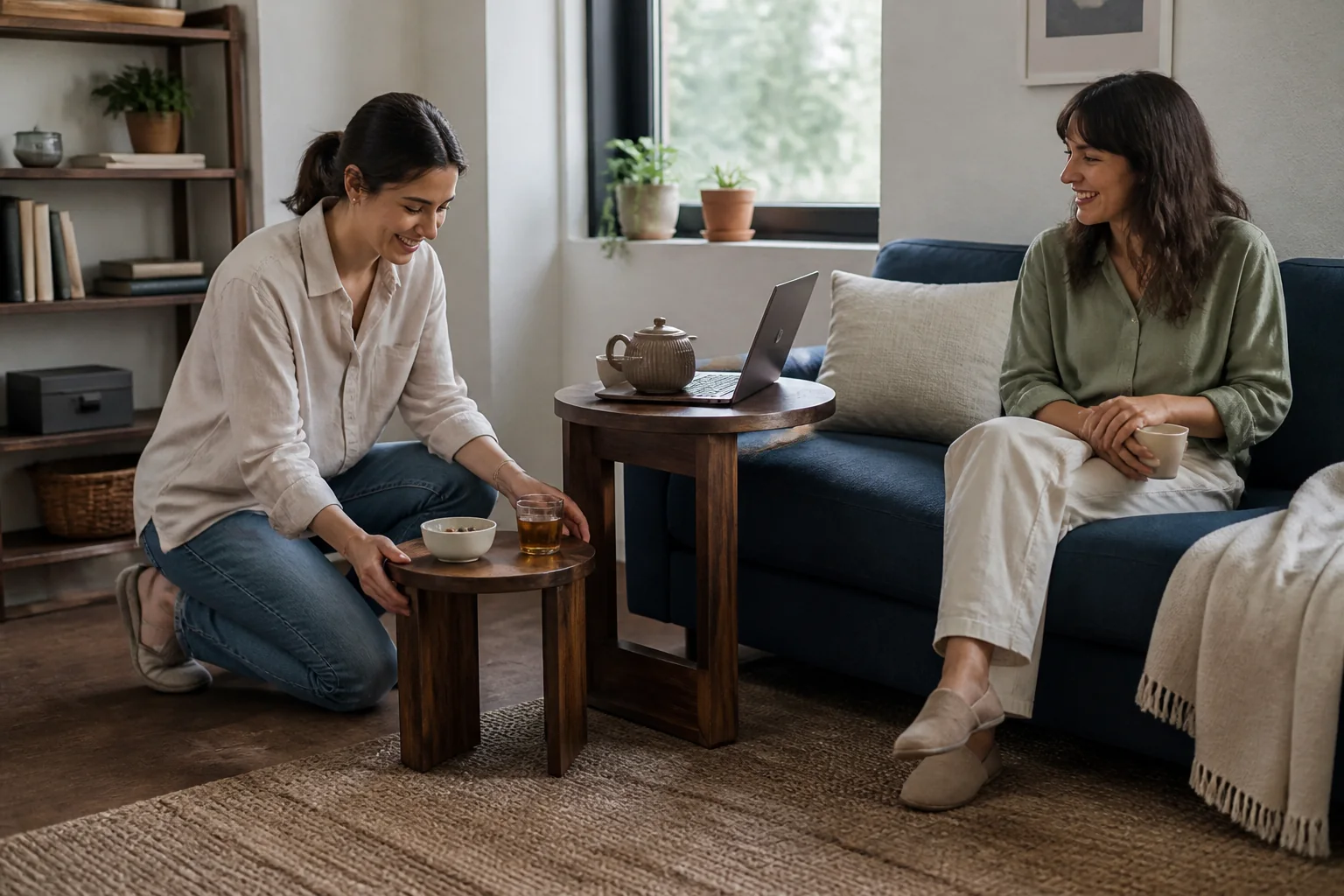
Nesting Tables That Earn Their Floor Space
Pick nesting tables that separate when guests arrive and tuck away without wobbling, scratching, or wasting room.
Read the guide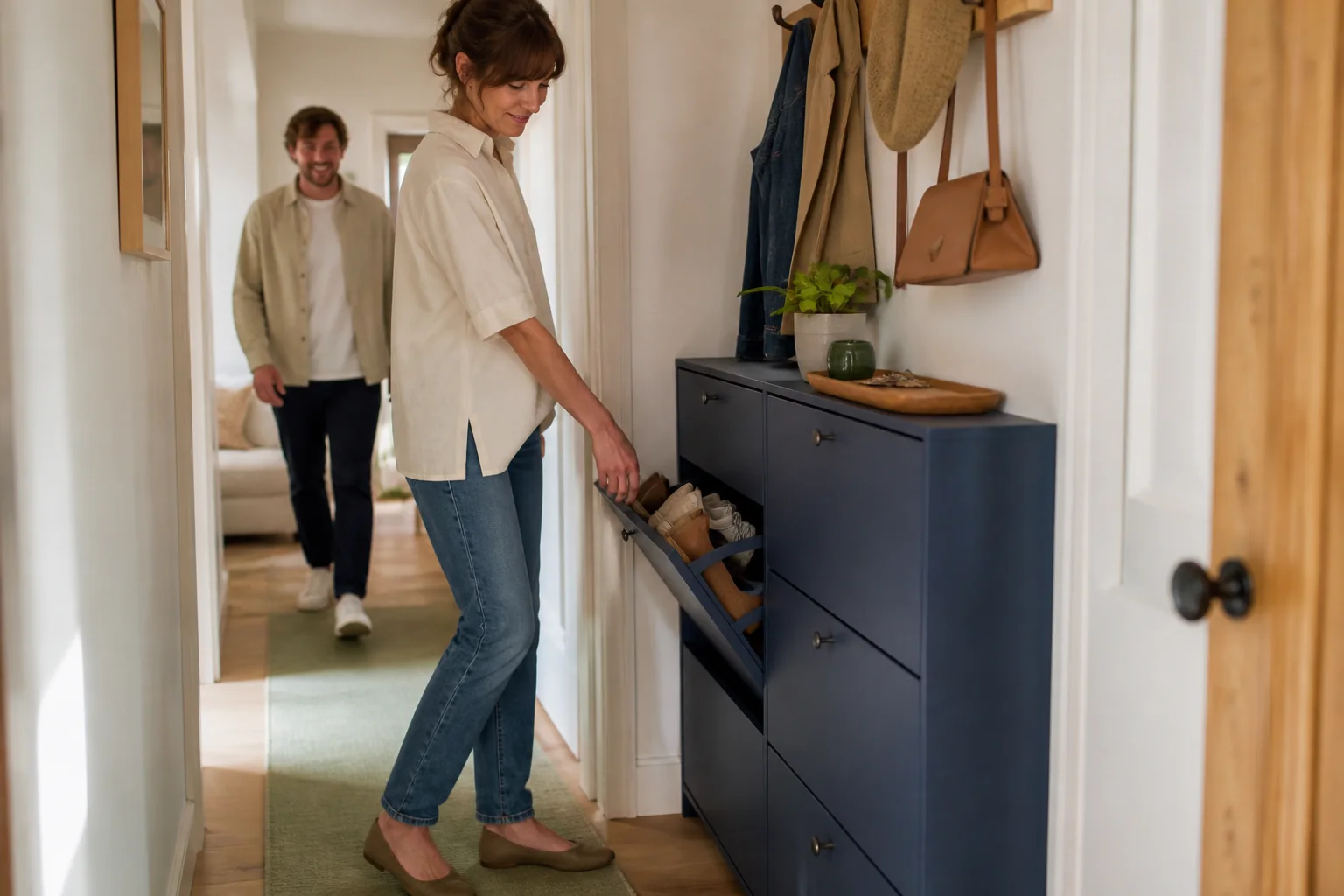
Shoe Storage for a Narrow Hall or Closet
Keep everyday footwear accessible without narrowing the path, hiding every pair, or creating a difficult-to-clean pile.
Read the guide