
The Bathroom Cleaning Caddy That Saves a Trip
Assemble a compact, safe bathroom kit that keeps the right tools together and moves easily from sink to shower.
Shopping disclosure: Well1566 Home may earn a commission from qualifying purchases made through marked links, at no extra cost to you. Recommendations are based on use cases and published details; we do not claim hands-on use unless an article explicitly documents it. Read our full disclosure.
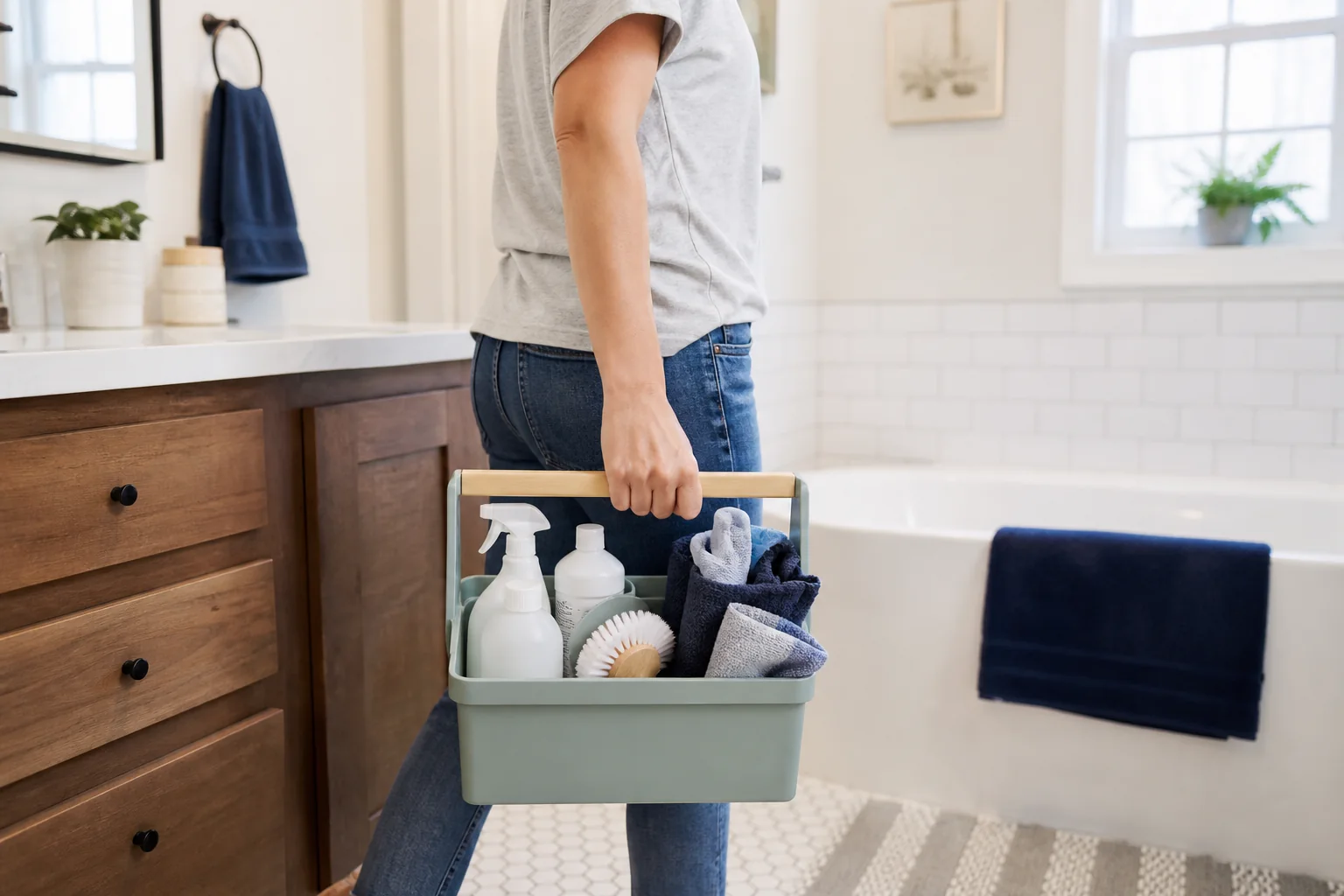
A bathroom clean becomes longer when every step requires another trip for a cloth, brush, or product. A well-planned caddy keeps a limited set of room-appropriate supplies together so you can move from mirror to sink, toilet, and shower in a logical loop. It should be light enough to carry, simple to wipe, and stable when placed on a damp floor.
The caddy is an organization tool, not permission to combine chemicals. Keep products in their original labeled containers, follow ventilation and surface instructions, and never mix cleaners. If children or pets are present, store the complete kit in a secured location rather than leaving it beside the bathroom fixtures.
The Ten-Minute Before-Guests Reset
Friends text that they are twenty minutes away. The bathroom needs a quick reset, but glass cleaner is in the kitchen, spare cloths are downstairs, and the narrow grout brush is lost in a utility drawer. Half the available time goes to collecting supplies, and the first wet cloth leaves nowhere sensible to go.
A compact caddy changes the sequence. Clean cloths sit in one dry section, bottles stand upright in the center, and two task-specific brushes occupy a removable cup. The bathroom is cleaned from least soiled surfaces to most soiled, used textiles go directly to laundry, and the empty caddy receives a quick wipe before secure storage.
Build the Kit Around Bathroom Tasks
List the surfaces you actually maintain: mirror, sink, faucet, counter, toilet exterior, tub or shower, and floor edges. Select only products approved by their manufacturers for those materials. Natural stone, specialty finishes, acrylic, glass, and sealed tile may require different care. A general-purpose product can reduce bottle count only when it is suitable for the relevant surfaces.
Add a small number of tools with clear jobs: color-coded microfiber cloths, a non-scratching sponge, a detail brush, and any dedicated toilet tool stored separately. Disposable gloves or reusable household gloves can live in a dry compartment. Do not crowd the caddy with backups; refills belong in safe longer-term storage.
- Choose products by surface guidance, not fragrance or bottle color.
Choose a Caddy That Carries Well
A central handle leaves the other hand free for doors or a small bin. Test the handle height against your tallest bottle and make sure the grip remains comfortable when the kit is full. A broad base reduces tipping, while internal dividers stop bottles from leaning. Rounded corners and smooth plastic are easier to wipe than woven material or complex seams.
Open sides or drainage holes can help damp brushes dry, but they also allow a leaking bottle to escape. A solid base contains small drips and protects shelves, provided wet items are removed to dry. Some caddies include removable compartments; these can separate cloths or travel to the shower, though every loose piece creates another item to clean.
- Check loaded balance with bottles in their likely positions.
Create a Clean-to-Dirty Workflow
Move from mirrors and lightly touched surfaces toward the toilet and floor so tools do not carry grime backward. Fold cloths into sections and rotate to a clean face as you work. Follow label directions for application, contact time, rinsing, and ventilation; more product is not necessarily more effective and can leave residue.
At the end, place washable cloths in the laundry, rinse permitted tools, and allow everything to dry fully before repacking. Wipe the caddy itself, check caps, and return it to secure storage. Restock when a bottle approaches empty rather than carrying duplicate containers that increase weight and leakage risk.
- Begin with the least soiled surfaces and finish with the floor.
A quick before-you-buy checklist
- List bathroom surfaces and check product compatibility.
- Keep every cleaner in its original labeled container.
- Select a stable base and comfortable central handle.
- Separate clean cloths from used or toilet-area tools.
- Avoid carrying heavy refill bottles in the daily kit.
- Plan secure storage away from children and pets.
- Choose parts that can dry and wipe clean easily.
The bottom line
The caddy that saves the most time is compact, task-based, and easy to reset. Choose a stable washable design, carry only products suited to the room's surfaces, and follow a clean-to-dirty route. Safe storage and thorough drying matter as much as the compartments that look convenient on shopping day.
Frequently asked questions
What belongs in a basic bathroom cleaning caddy?
Include surface-appropriate cleaners in original containers, a few color-coded cloths, a non-scratching sponge, gloves, and one or two detail tools. Keep toilet tools separate and store bulk refills elsewhere.
Should a cleaning caddy have drainage holes?
Ventilation helps damp tools dry, but open holes cannot contain bottle leaks. Choose based on your routine, or pair a ventilated insert with a solid washable tray and always verify that product caps are secure.
Can I keep the caddy under the bathroom sink?
Yes only if product labels allow it, the area is dry, plumbing remains accessible, and the cabinet can be secured when needed. Inspect periodically for leaks and keep the kit away from towels or paper supplies.
More in Cleaning & Organization
More guides you'll use

How to Choose a Cordless Vacuum for Daily Messes
Find a cordless vacuum that suits your floors, storage, household debris, and realistic cleaning rhythm.
Read the guide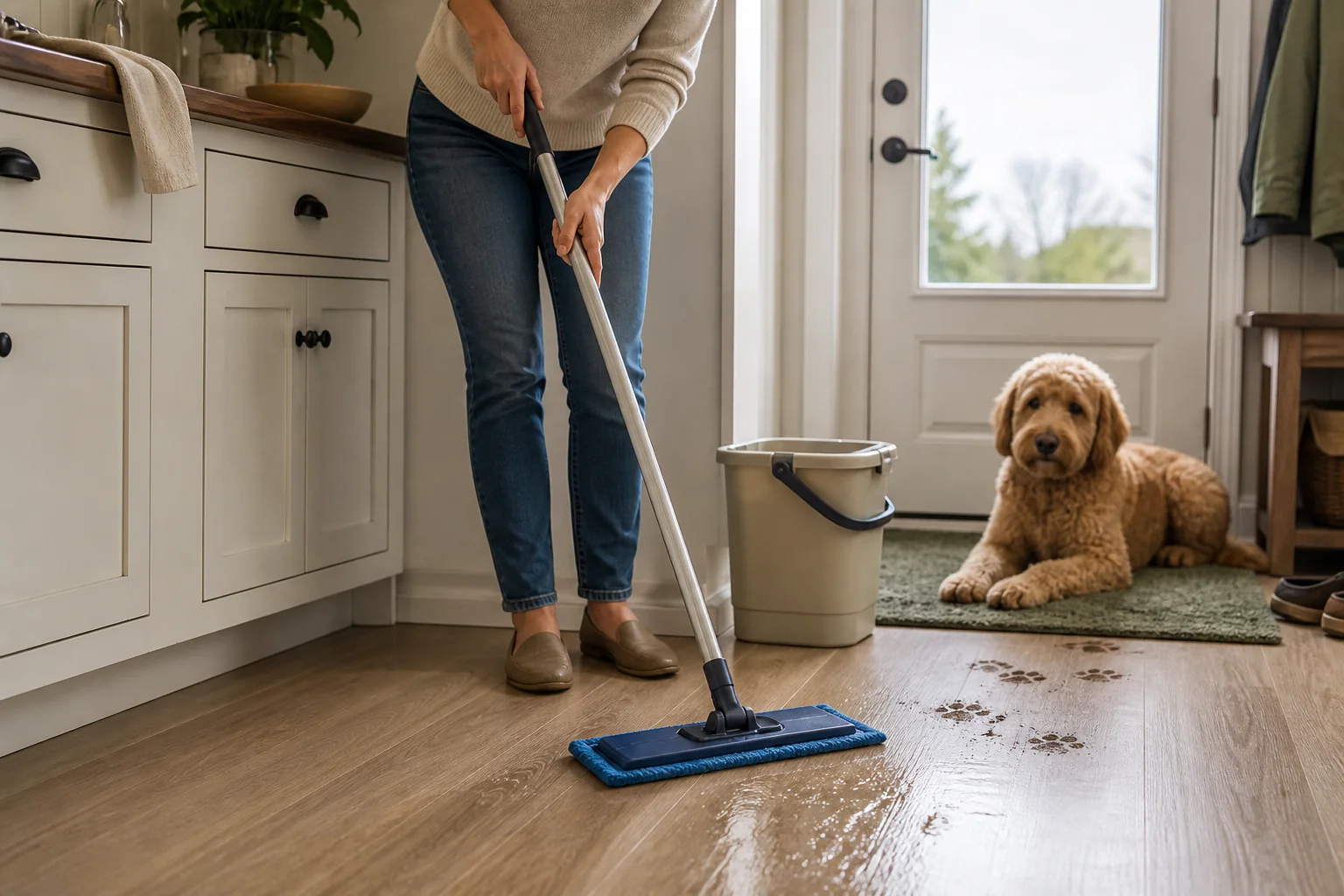
Mop Systems for Quick Kitchen and Entryway Cleanups
Compare spray, spin, and flat mop systems by the spills, floor finishes, and storage limits in your home.
Read the guide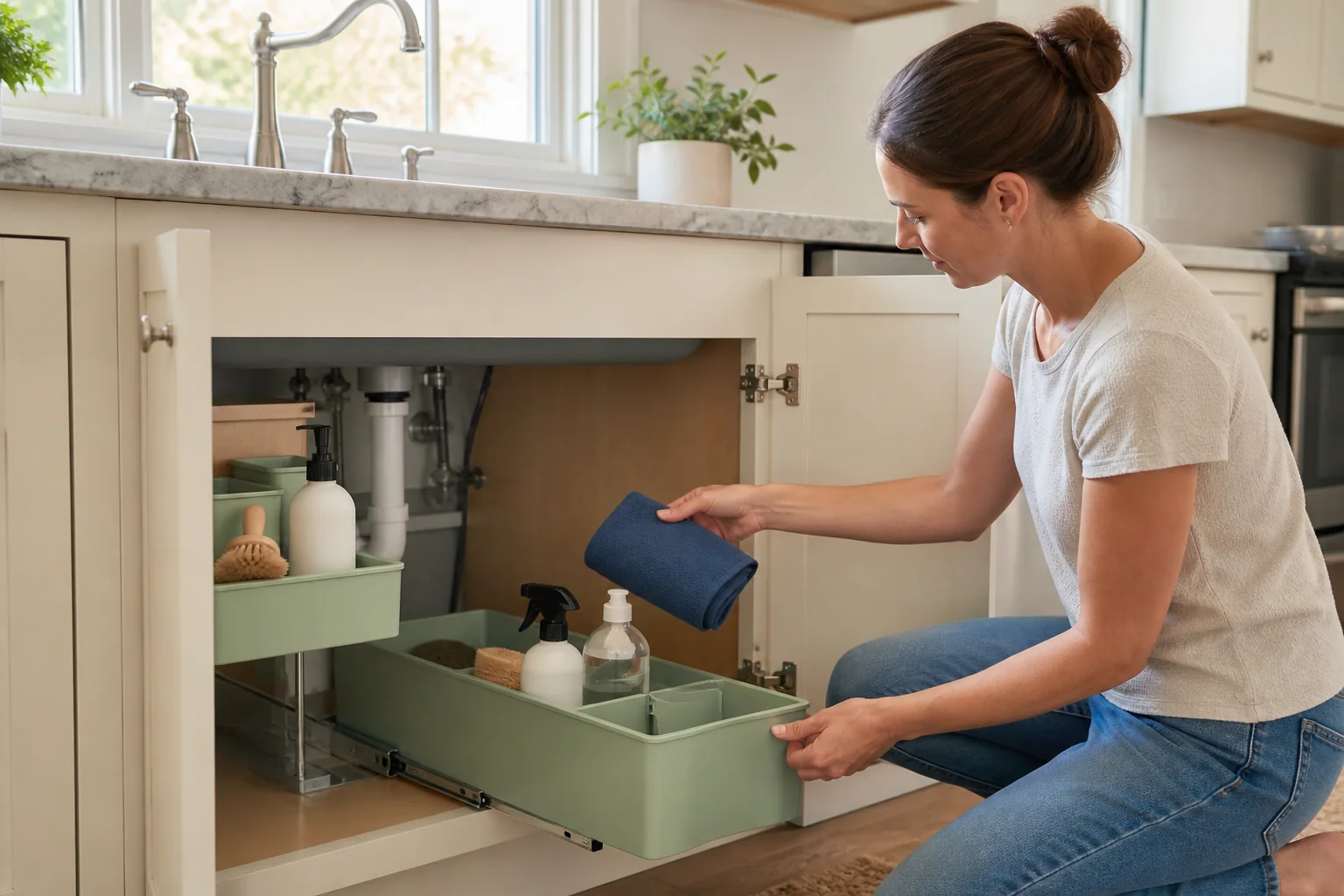
Under-Sink Organization Without Wasted Space
Turn an awkward cabinet around plumbing into safe, visible storage for the supplies you use most.
Read the guide