
How to Keep Countertop Appliances Under Control
Decide which appliances deserve daily counter space and give occasional tools a measured, reachable storage plan.
Shopping disclosure: Well1566 Home may earn a commission from qualifying purchases made through marked links, at no extra cost to you. Recommendations are based on use cases and published details; we do not claim hands-on use unless an article explicitly documents it. Read our full disclosure.
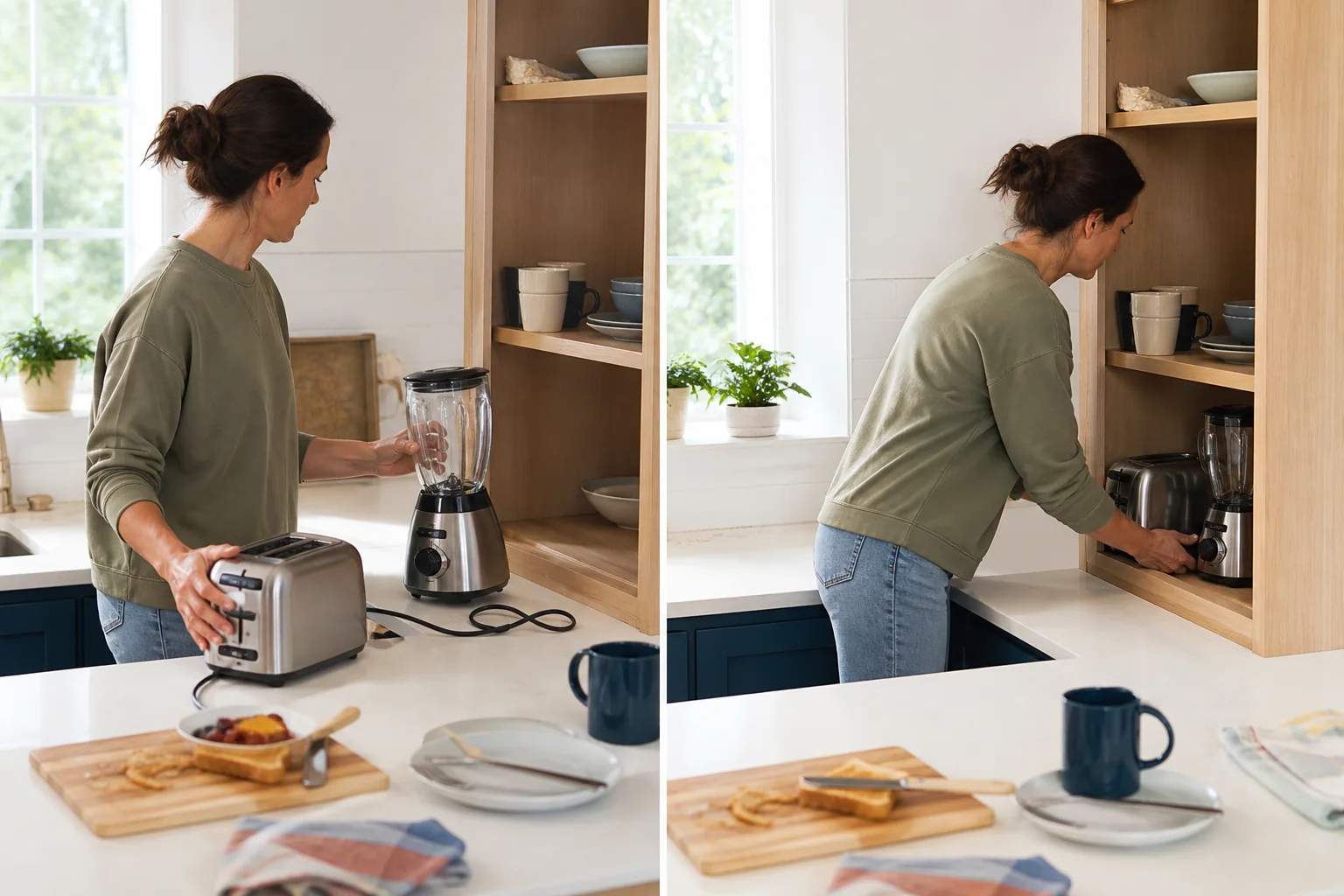
Counter space disappears when every appliance is treated as equally essential. The coffee maker used each morning may deserve a permanent station; the blender used twice a month probably does not. A workable kitchen separates daily, weekly, and occasional tools, then stores each group according to weight, access, ventilation, and safe operation.
The goal is not an empty counter. It is enough uninterrupted surface for preparing food and setting down hot or heavy items. Before buying shelves, carts, or sliding trays, inventory the appliances and read their placement instructions. Organizers should improve access without encouraging operation in an enclosed or unstable location.
The Chopping Board Has Nowhere to Land
Dinner starts with a cutting board balanced between a toaster and a blender. The mixer sits under a low cabinet, even though it has not been used this month, and the coffee maker must slide forward each morning. Cords cross behind three devices, making the area tedious to wipe. The kitchen owns enough counter, but little of it functions as prep space.
A frequency audit leaves the coffee maker and toaster in one breakfast zone. The blender moves to a reachable cabinet shelf, and the mixer receives a sturdy lower shelf because of its weight. A small sliding tray helps move the coffee maker only if the maker's clearance guidance is maintained. The cleared section becomes a permanent chopping and plating area.
Rank Appliances by Real Frequency
For two weeks, note each appliance use. Daily items can remain out if they have an appropriate operating location. Weekly tools belong in the easiest cabinet or pantry shelf. Rare tools can move higher or farther away, provided their weight and lifting path remain reasonable. An unused single-purpose device may be a candidate to relocate or pass on.
Separate frequency from aspiration. A juicer does not earn prime space because someone hopes to use it. Give it a trial shelf and promote it only when the routine changes. This keeps the counter tied to evidence rather than guilt.
- Track actual use for two normal weeks.
- Reserve prime space for daily or nearly daily tools.
- Store heavy appliances between knee and shoulder height when practical.
Create Zones With Safe Clearances
Group devices that support one routine, such as breakfast or baking, near their ingredients and accessories. Keep one uninterrupted prep zone beside the most-used work area. Check overhead, side, and rear clearances in each appliance manual, especially for devices producing heat, steam, or moving air.
Do not operate an appliance inside a closed cabinet unless it is designed and installed for that use. Pull-out trays can improve access, but the surface must remain stable and the appliance still needs its required clearance. Keep cords away from sinks, burners, and counter edges.
- Measure appliances with lids, doors, and accessories fully open.
- Preserve a clear prep area rather than filling every short counter segment.
- Follow maker guidance for ventilation, heat, steam, and outlet use.
Choose Storage That Makes Return Easy
A cabinet shelf should let an appliance slide out without unloading several objects first. Store accessories in a labeled bin beside the device, not in a distant drawer. Shelf risers can use vertical space for light components, while heavy machines need a surface intended for their weight.
Measure every organizer and cabinet opening before purchase. A rolling cart can help a kitchen without cabinets, but it also consumes floor space and must not narrow a route. Review wheel locks, surface dimensions, and the appliance's operating instructions before treating a cart as a work station.
- Keep attachments and manuals with the appliance they support.
- Avoid storage arrangements that require risky lifting or deep reaching.
- Revisit the inventory seasonally as cooking habits change.
A quick before-you-buy checklist
- Track appliance use for two weeks.
- Protect one uninterrupted food-prep zone.
- Measure devices with moving parts fully open.
- Review heat, steam, ventilation, and outlet instructions.
- Store heavy items along a comfortable lifting path.
- Keep each appliance's accessories beside it.
The bottom line
Countertop control begins with honest frequency, not more storage products. Keep daily tools in safe operating zones, move weekly appliances to reachable shelves, and protect one reliable prep surface. Retailer searches can help compare organizer dimensions, tray movement, shelf capacity, and cart footprint. An organizer is worth buying only when it makes use and return easier while respecting the appliance's own placement instructions.
Frequently asked questions
Which appliances should stay on the counter?
Keep devices used daily or almost daily when there is a suitable operating location. Weekly and occasional tools usually belong in accessible storage so the counter can support food preparation.
Can appliances be used inside an appliance garage?
Only when the cabinetry and appliance are specifically designed and installed for that operation. Otherwise, move the appliance to a suitable open location and follow all clearance and ventilation instructions.
Is a rolling cart a good appliance station?
It can be when the floor route remains clear and the cart is stable, lockable, and suitable for the expected load. Appliance clearance, cord, and operating guidance still applies.
More in Kitchen & Dining
More guides you'll use

Meal Prep Containers for Real Weekday Lunches
Choose container shapes and materials around the lunches you actually pack, reheat, carry, and wash.
Read the guide
The Everyday Cookware Starter Set: What You Need
Build a compact cookware collection around everyday techniques instead of buying a boxed set with pieces you may never use.
Read the guide
Build a Coffee Station for Unhurried Mornings
Group coffee tools, mugs, water, and cleanup supplies into a compact station that supports the way mornings really unfold.
Read the guide