
The Everyday Cookware Starter Set: What You Need
Build a compact cookware collection around everyday techniques instead of buying a boxed set with pieces you may never use.
Shopping disclosure: Well1566 Home may earn a commission from qualifying purchases made through marked links, at no extra cost to you. Recommendations are based on use cases and published details; we do not claim hands-on use unless an article explicitly documents it. Read our full disclosure.
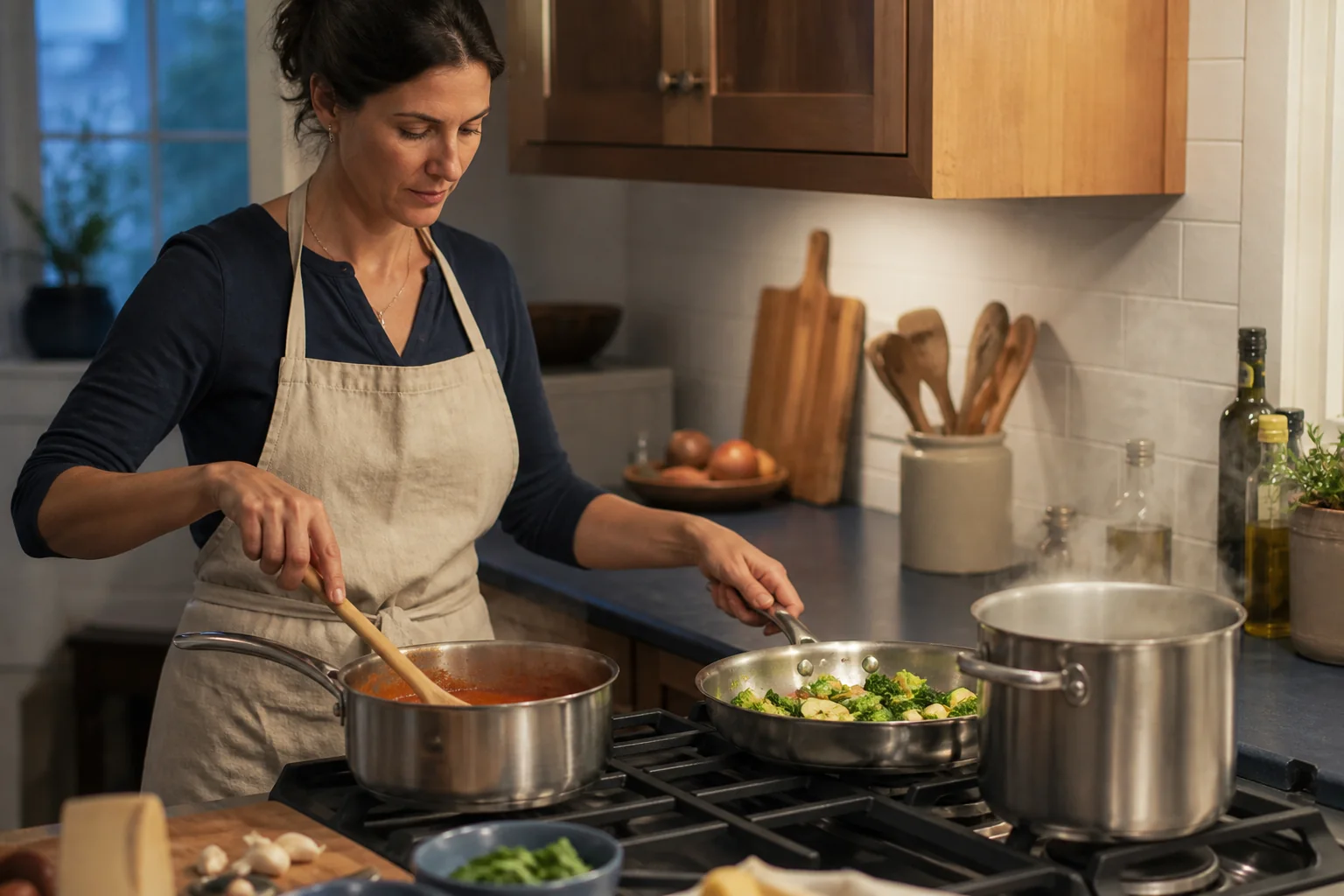
A useful starter collection can be remarkably small: a skillet for quick stovetop meals, a saucepan for grains and sauces, and a larger lidded pot for soups or pasta. The right materials and sizes depend on cooking habits, stove compatibility, lifting comfort, and willingness to follow specific care routines.
Instead of counting pieces in a boxed set, list the techniques used during an ordinary week. Searing, simmering, boiling, and oven finishing each place different demands on a pan. Compare published dimensions, construction, handle design, lids, and care instructions, then add one specialty item only when a recurring recipe justifies it.
Dinner in a One-Cabinet Kitchen
A first apartment has one narrow cookware cabinet and a small stove. Weeknight dinner might be eggs and vegetables, rice with a quick sauce, or pasta for two. A large boxed set seems convenient, but duplicate small saucepans would consume the shelf while the household still lacks one roomy pot for shared meals.
A measured three-piece plan works better. A versatile skillet handles breakfast and sauteed dinners, a medium saucepan covers grains and reheating, and a lidded pot supports pasta and soup. A sheet pan already in the kitchen handles roasting. The pieces nest only where surfaces will not be damaged, and lids stand in a divider beside them.
Start With Techniques, Portions, and Storage
Review several recent meals and mark which vessel each required. A household cooking small portions may value a medium skillet more than an oversized one. People who batch soup need greater pot capacity. Measure cabinet width and height, including lid and handle clearance, before deciding how many pieces can live there.
Check the cookware maker's stated stovetop compatibility. Flatness, base construction, and handle materials affect where a pan can be used. If meals often move from stovetop to oven, verify the limits for the body, lid, and handle rather than assuming the entire piece shares one specification.
- List five common dinners and the cookware each one needs.
- Measure cabinet, drawer, stove, and oven clearances.
- Confirm compatibility with the specific cooking surface.
Understand the Material Tradeoffs
Stainless steel is versatile and durable but rewards heat and oil management. Nonstick surfaces can simplify delicate foods and cleanup, yet require compatible utensils and careful attention to the maker's care and replacement guidance. Cast iron retains heat and adds weight; enameled versions change the maintenance routine but remain heavy.
No single material needs to fill every role. A stainless saucepan, a skillet chosen for the household's preferred technique, and an enameled or stainless pot can coexist. Pick the material whose care you will follow, not the one that sounds most professional.
- Lift comparable pans in person when weight or grip is a concern.
- Read utensil, cleaning, and stacking guidance before purchase.
- Treat lids and helper handles as part of the lifting decision.
Buy Usable Handles and Lids
Handle angle and balance affect daily confidence more than decorative finish. Look at the filled-pan grip, helper handle, lid knob, and clearance between adjacent burners. A long handle that fits the stovetop may still prevent the pan from entering a small oven or cabinet.
Lids should match the meals you cook. A clear lid offers visibility, while metal reduces breakable parts. Steam vents and handle shapes vary, so review instructions for safe use. Store lids vertically when possible and protect cooking surfaces if the maker discourages direct stacking.
- Check grip shape with an oven mitt if oven use is planned.
- Confirm the lid is included rather than pictured as an accessory.
- Leave cabinet space for safe, low-friction storage.
A quick before-you-buy checklist
- Map recent meals to the smallest useful cookware list.
- Confirm stove, oven, and induction compatibility where relevant.
- Measure cabinet space including handles and lids.
- Compare filled-pan weight and helper-handle design.
- Read cleaning, utensil, and stacking directions.
- Delay specialty pans until a repeated recipe needs one.
The bottom line
A starter cookware collection should reflect techniques, portions, and storage rather than an impressive box count. Compare retailer options by usable diameter, total dimensions, material care, lid design, and cooking-surface compatibility. Three well-chosen vessels can support a broad weekly menu. Add only when a real recipe exposes a limitation, and choose construction whose maintenance fits the way the kitchen is actually used.
Frequently asked questions
Is a boxed cookware set a good starting point?
It can be when most included sizes match your meals and storage. Compare each piece with your technique list; a lower piece count assembled individually may provide more useful capacity and fewer duplicates.
Do all pots need matching lids?
No, but the saucepan and larger simmering pot often benefit from fitted lids. A skillet lid matters when your regular recipes call for covered cooking; otherwise it may add unnecessary storage.
Which cookware material is easiest for beginners?
Ease depends on technique and care habits. Nonstick can simplify some foods, stainless supports varied cooking with practice, and cast iron brings weight and maintenance. Choose by your meals and instructions you will follow.
More in Kitchen & Dining
More guides you'll use

Meal Prep Containers for Real Weekday Lunches
Choose container shapes and materials around the lunches you actually pack, reheat, carry, and wash.
Read the guide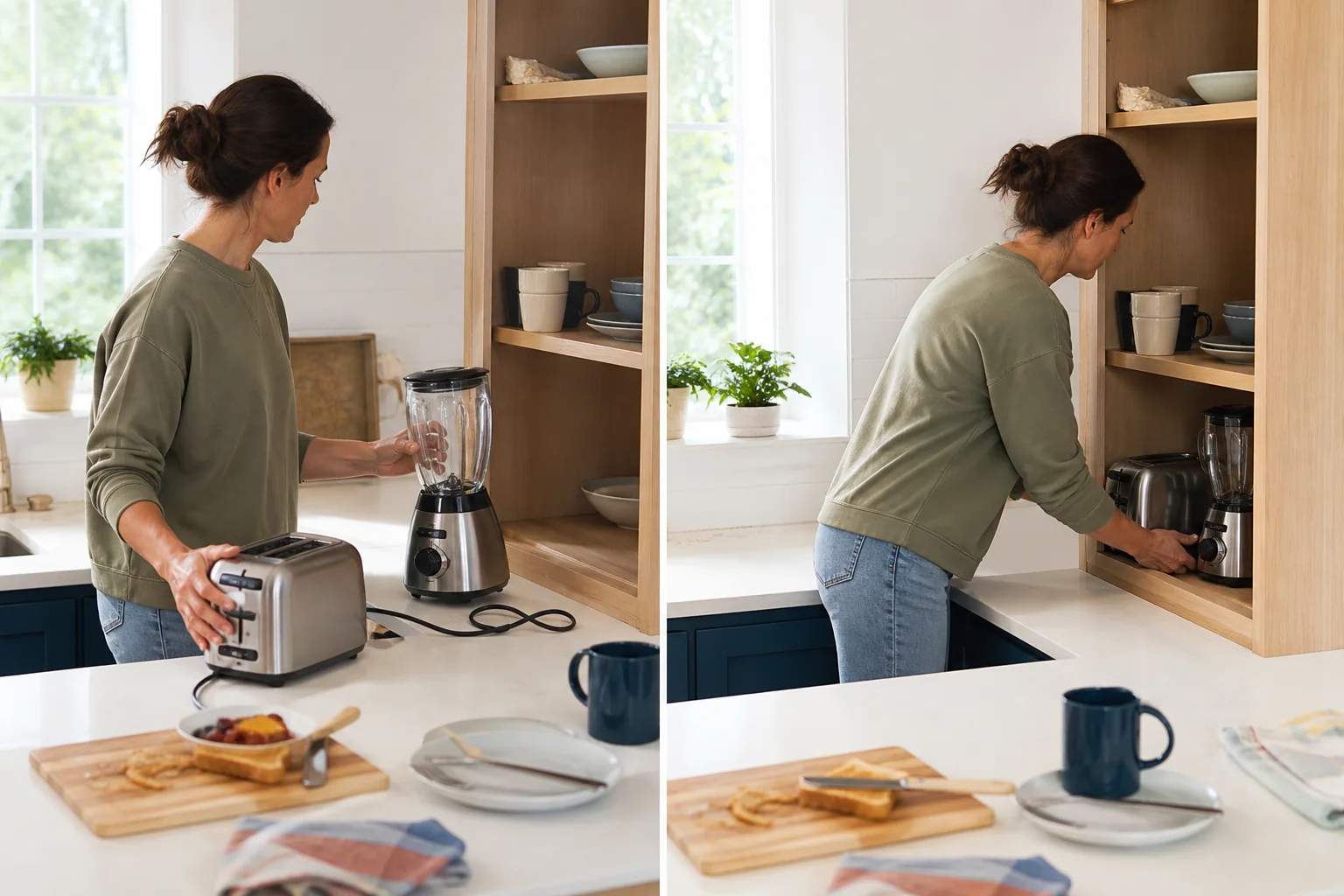
How to Keep Countertop Appliances Under Control
Decide which appliances deserve daily counter space and give occasional tools a measured, reachable storage plan.
Read the guide
Build a Coffee Station for Unhurried Mornings
Group coffee tools, mugs, water, and cleanup supplies into a compact station that supports the way mornings really unfold.
Read the guide