
Weighted Blankets: Comfort, Sizing, and Care
Understand the fit, fill, temperature, and care tradeoffs before adding extra weight to a bed or sofa.
Shopping disclosure: Well1566 Home may earn a commission from qualifying purchases made through marked links, at no extra cost to you. Recommendations are based on use cases and published details; we do not claim hands-on use unless an article explicitly documents it. Read our full disclosure.
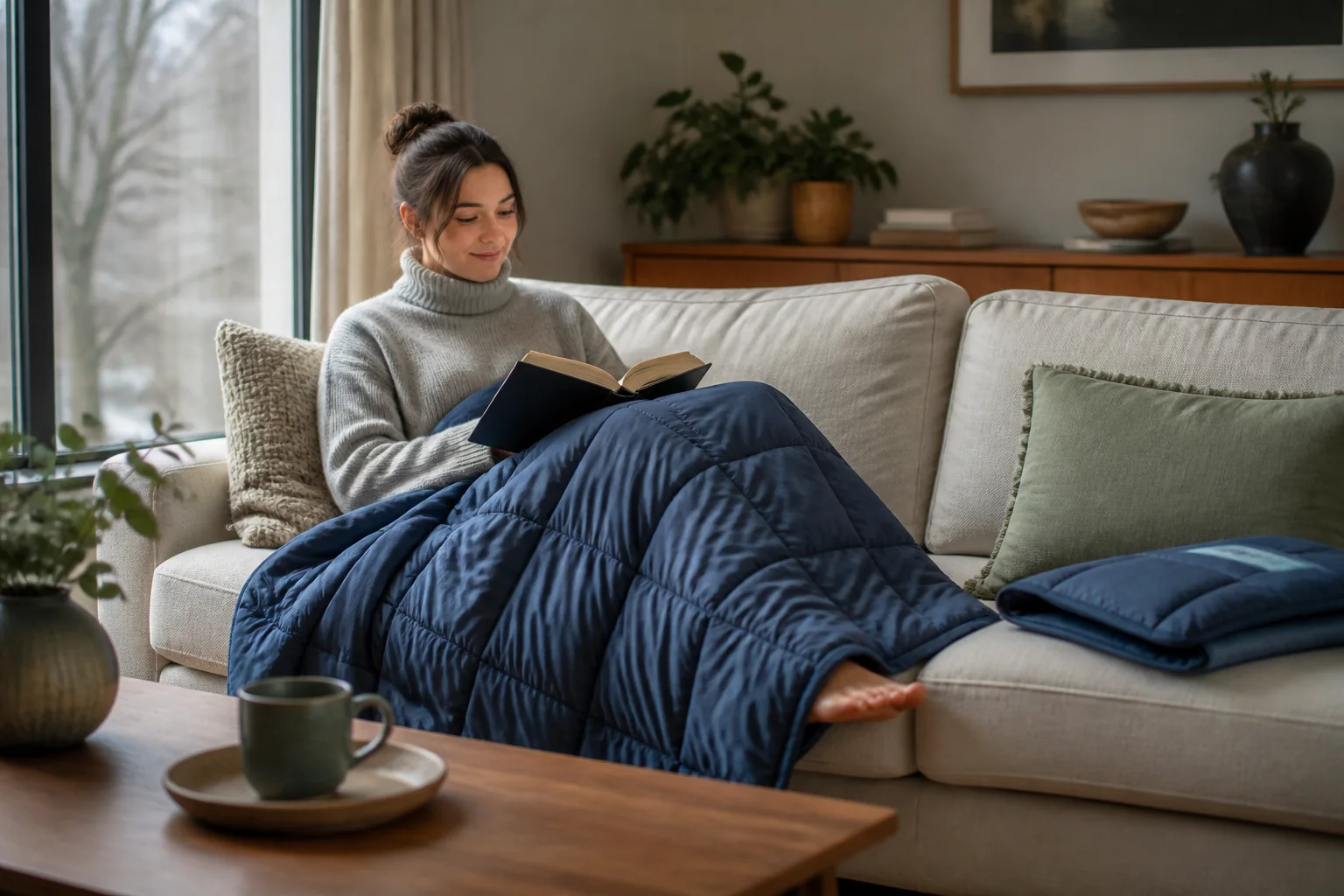
A weighted blanket can create a close, tucked-in sensation, but it is not a one-size-fits-all bedding upgrade. Weight distribution, dimensions, fill, outer fabric, and washability determine whether it feels comfortably settled or simply cumbersome. It also deserves more careful safety consideration than an ordinary throw.
This guide treats a weighted blanket as a comfort product, not a medical device or a promised solution for sleep. Anyone with mobility, breathing, circulation, temperature-regulation, or other health concerns should ask a qualified clinician whether added weight is appropriate. Infants and people who cannot remove a blanket independently should not use one.
From Sofa to Bed
Imagine an adult who first wants a weighted layer while reading on the sofa, then expects to move it to a shared queen bed. A compact throw stays centered on one body and is easier to lift, but it will not cover the mattress like a comforter. An oversized blanket may pull toward one side, crowd a partner, and become difficult to wash.
The better purchase begins with the primary use. A personal-size blanket that rests below the shoulders, remains easy to remove, and fits the available washer is more practical than choosing by bed size alone. Trying a returnable option can also reveal whether the sensation is appealing before a heavier commitment.
Think About Weight as a Personal Fit
Retail guidance sometimes describes blanket weight as a proportion of body weight, but that is only a rough shopping reference, not a rule. Comfort, strength, ease of movement, and the blanket's footprint change how the pressure feels. The user should be able to reposition and remove it without assistance, and the blanket should never restrict the face or neck.
Start lighter when uncertain. A smaller blanket concentrates its weight more than a wide one of the same total weight, and separate blankets usually give partners better control.
- Choose for the individual user rather than matching a mattress label.
- Keep the blanket below the shoulders and away from the face.
- Confirm the user can lift, shift, and remove it independently.
Compare Fill, Stitching, and Temperature
Most weighted blankets distribute small beads or pellets through stitched pockets. Smaller pockets can help limit migration, while even seams and reinforced edges reduce bunching. Glass-bead styles may feel slimmer for a given weight; other fills can create more bulk. The exterior might be cotton, synthetic microfiber, plush fabric, or a cooling-oriented weave.
No textile stays truly cool in every setting when it adds mass and insulation. Warm sleepers should prioritize breathable covers, a lower-profile construction, and bedroom ventilation. People seeking a cozy winter layer may prefer a soft plush cover. A removable duvet-style cover simplifies routine cleaning, but ties or loops must be secure enough to stop the inner blanket from folding inside it.
- Inspect pocket size and seam consistency for even distribution.
- Match the cover texture to the season and personal heat preference.
- Look for enough attachment points when using a removable cover.
Plan the Laundry Before the Purchase
A blanket can be labeled washable yet still exceed the safe capacity of a household machine when wet. Check both the product instructions and appliance limits. Some inserts require spot care or commercial laundering, while removable covers can go through routine cycles. The total effort matters because a difficult-to-clean comfort item may be used less often than expected.
Protect the blanket with a washable cover and avoid dragging it by one corner. Store it flat or evenly supported. Review return terms because comfort is subjective and a heavy return can be inconvenient.
- Check the exact care label and the washer's capacity guidance.
- Include the cover's weight and drying time in the routine.
- Review return shipping details before opening packaging.
A quick before-you-buy checklist
- Confirm added weight is appropriate for the intended user.
- Choose a personal footprint before choosing total weight.
- Make sure the user can remove the blanket independently.
- Compare pocket construction, fill movement, and cover fabric.
- Check the product care label and washer capacity.
- Read return and shipping terms for a heavy item.
The bottom line
Choose a weighted blanket for one person's comfort and independent removal. A smaller, washable, returnable option is a sensible way to explore this subjective preference.
Frequently asked questions
Should a weighted blanket cover the whole bed?
Not necessarily. These blankets are generally chosen for the individual using them, and a personal-size footprint can keep the weight centered without hanging over the mattress edge. It may sit on top of regular bedding rather than replace it. Follow the maker's positioning and safety instructions.
Can two people share one weighted blanket?
They can only if both find the same pressure and temperature comfortable and can each remove it easily, but separate blankets usually offer better control. One person can move without pulling the weight across a partner, and each user can select a suitable footprint and fabric.
How do I wash a weighted blanket?
Follow the exact care label and respect the capacity limits of the washer and dryer. Some inserts are machine washable, some require spot cleaning, and others need larger commercial equipment. A removable washable cover can reduce how frequently the heavy inner blanket needs cleaning.
More in Bedding & Bath
More guides you'll use

How to Choose Breathable Sheets for Every Season
Compare fibers, weaves, feel, and care requirements to build a comfortable sheet rotation through changing weather.
Read the guide
A Practical Pillow Guide for Different Sleep Styles
Use sleep position, mattress feel, fill behavior, and care preferences to narrow an overwhelming pillow aisle.
Read the guide
Choosing a Duvet Insert Without Guesswork
Compare warmth, fill, weight, construction, sizing, and care to choose a duvet insert that fits your room and routine.
Read the guide