
Shower Storage for Bottles, Razors, and Real Bathrooms
Build shower storage around your surfaces, routine, and cleaning habits rather than balancing bottles on every ledge.
Shopping disclosure: Well1566 Home may earn a commission from qualifying purchases made through marked links, at no extra cost to you. Recommendations are based on use cases and published details; we do not claim hands-on use unless an article explicitly documents it. Read our full disclosure.
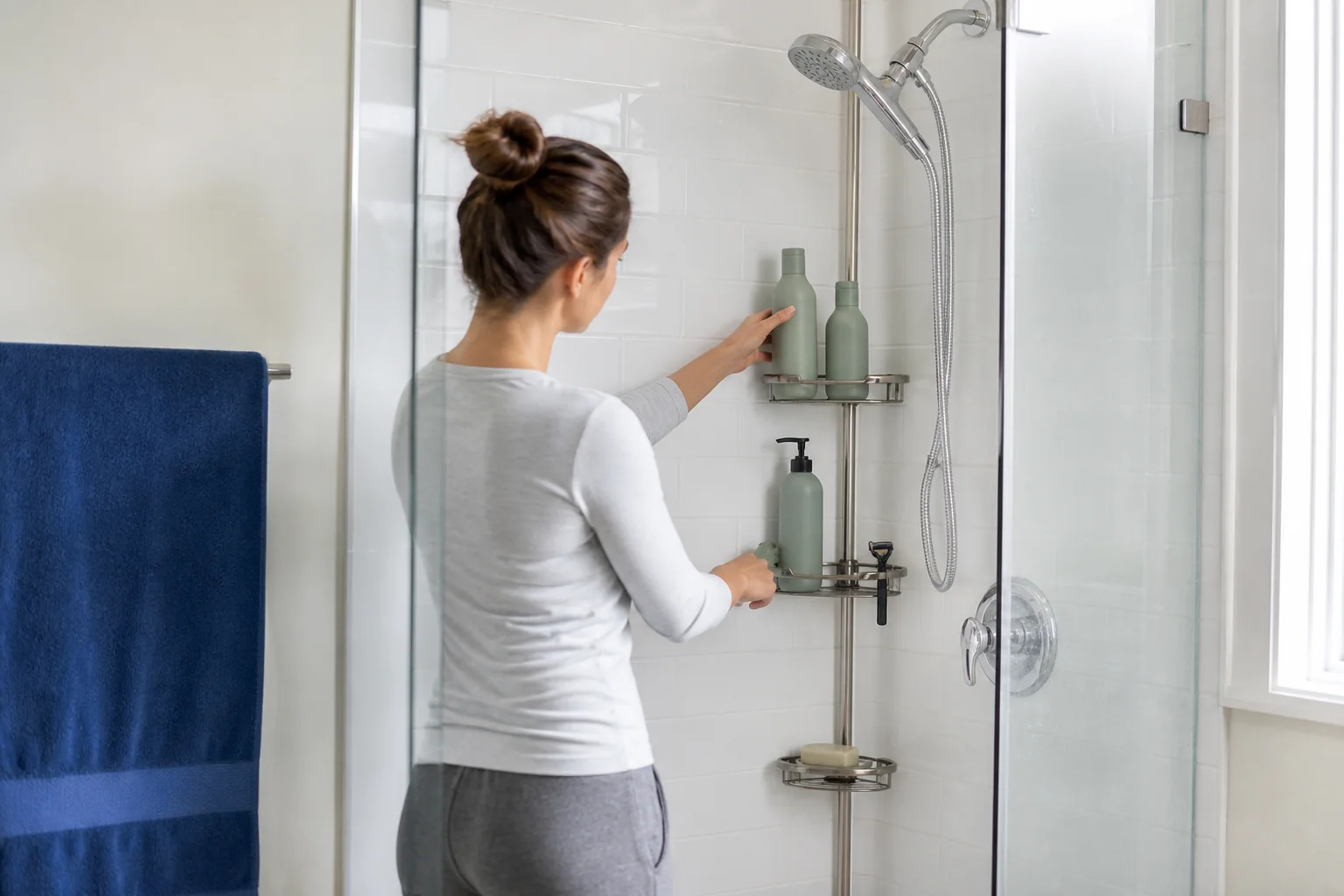
Shower storage looks simple until a household has tall pump bottles, a razor that needs to dry safely, and a bar of soap dissolving in a puddle. A useful organizer should keep items within reach, let water drain, fit the shower without blocking movement, and come down easily when the walls need cleaning.
The right solution depends on where it will attach. Tile, fiberglass surrounds, glass doors, fixed showerheads, and tension-friendly corners all create different constraints. Before comparing finishes or shelf counts, inventory the products actually used and identify a mounting method the surface and lease allow.
The Bottle Avalanche Before Work
In a narrow tub-shower, one person reaches for face wash and knocks two family-size bottles from the rim. A razor sits behind the faucet because there is no dry holder, while a washcloth hangs over the curtain rod. The clutter slows a rushed morning and makes wiping the tub unnecessarily awkward.
A two-tier organizer could solve the problem, but only if its shelves accommodate the tallest pumps and its attachment suits the wall. Measuring the bottle heights and checking the distance from showerhead to controls turns an impulse purchase into a simple space plan.
Choose the Mounting Method First
Over-the-showerhead caddies are familiar and require little wall preparation, but they can slip or interfere with handheld hoses. Over-door versions can work in enclosures with compatible frames, though hooks must not prevent the door from closing. Tension poles use vertical corners efficiently but need a stable floor-to-ceiling span. Freestanding stools are flexible, yet consume valuable floor space.
Adhesive-mounted shelves create an uncluttered look on a compatible smooth surface. Their success depends on careful preparation, curing time, total load, humidity, and the maker's surface instructions. Suction designs are easy to reposition but can lose grip when surfaces are textured or seams admit air. Renters should confirm removal requirements and avoid drilling unless expressly permitted.
- Inspect grout lines, texture, and curvature before choosing adhesive or suction mounting.
- Check clearance around controls, doors, curtains, and handheld hoses.
- Treat stated load limits as boundaries, not targets to exceed.
Make Every Product Easy to Reach
Count bottles by height and footprint, including replacements that may be wider than current products. Open-wire shelves can fit varied shapes and drain readily, while solid shelves need generous slots or channels. Pump bottles work best when the organizer does not flex under downward pressure, and inverted bottles benefit from a rail that keeps them from sliding.
Small accessories deserve dedicated spots. A razor hook should position the blade away from hands, a soap tray should drain, and washcloth bars should have airflow around them. If children use the shower, store adult grooming items out of reach and follow product safety guidance. Keep the floor and grab areas clear rather than adding storage where it creates an obstacle.
- Measure the tallest pump with the dispenser raised.
- Reserve one easy-reach shelf for daily items and one for occasional items.
- Avoid deep baskets that hide small products until they expire.
Buy for Drainage and Cleaning
A shower organizer lives in a demanding environment. Broad openings let water and soap residue escape, and fewer tight joints make scrubbing easier. Coated metal, stainless-style materials, and durable plastics each have advantages, but finish quality and care instructions matter more than a fashionable label. Inspect welds, fasteners, and cut edges for smoothness.
Choose an organizer that is easy to access or remove. Periodically empty it and clean both the organizer and mounting area as directed. Store spare bottles in a dry cabinet.
- Prefer open construction with few places for residue to collect.
- Confirm replacement adhesive pads or mounting parts are available if needed.
- Keep only currently used products in the wet zone.
A quick before-you-buy checklist
- Inventory bottles, bars, razors, and cloths used every week.
- Measure wall, corner, door, and showerhead clearances.
- Match the mounting system to the exact surface and rental rules.
- Check shelf height, drainage openings, hooks, and pump stability.
- Keep storage outside the main standing and grab areas.
- Choose a design that comes apart or wipes clean easily.
The bottom line
Start with surface compatibility, size storage around real bottles, and keep it clear of controls and movement. The right organizer makes showering and cleaning simpler.
Frequently asked questions
Do adhesive shower shelves work on grout lines?
Many adhesive systems need a clean, smooth, continuous surface, and a grout line can interrupt contact. Read the exact mounting instructions and measure shelf placement before ordering. If the approved area is too small or textured, consider a tension, over-head, or freestanding design instead.
How can I stop an over-showerhead caddy from sliding?
Choose a model with a secure collar or stabilizing suction cups that match the surface, then follow its installation directions. Balance heavy bottles across shelves and keep the hose path clear. If the caddy still moves during normal use, a different mounting style is likely the better answer.
What should stay outside the shower?
Backups, rarely used products, and items whose labels call for dry storage generally belong in a cabinet. Reducing the number of containers improves drainage and makes regular cleaning faster. Store anything potentially hazardous according to its instructions and away from children or pets.
More in Bedding & Bath
More guides you'll use

How to Choose Breathable Sheets for Every Season
Compare fibers, weaves, feel, and care requirements to build a comfortable sheet rotation through changing weather.
Read the guide
A Practical Pillow Guide for Different Sleep Styles
Use sleep position, mattress feel, fill behavior, and care preferences to narrow an overwhelming pillow aisle.
Read the guide
Choosing a Duvet Insert Without Guesswork
Compare warmth, fill, weight, construction, sizing, and care to choose a duvet insert that fits your room and routine.
Read the guide