
Why a Mattress Protector Belongs on Every Bed
Protect the hardest-to-clean item in the bedroom without turning the sleep surface noisy, hot, or loose.
Shopping disclosure: Well1566 Home may earn a commission from qualifying purchases made through marked links, at no extra cost to you. Recommendations are based on use cases and published details; we do not claim hands-on use unless an article explicitly documents it. Read our full disclosure.
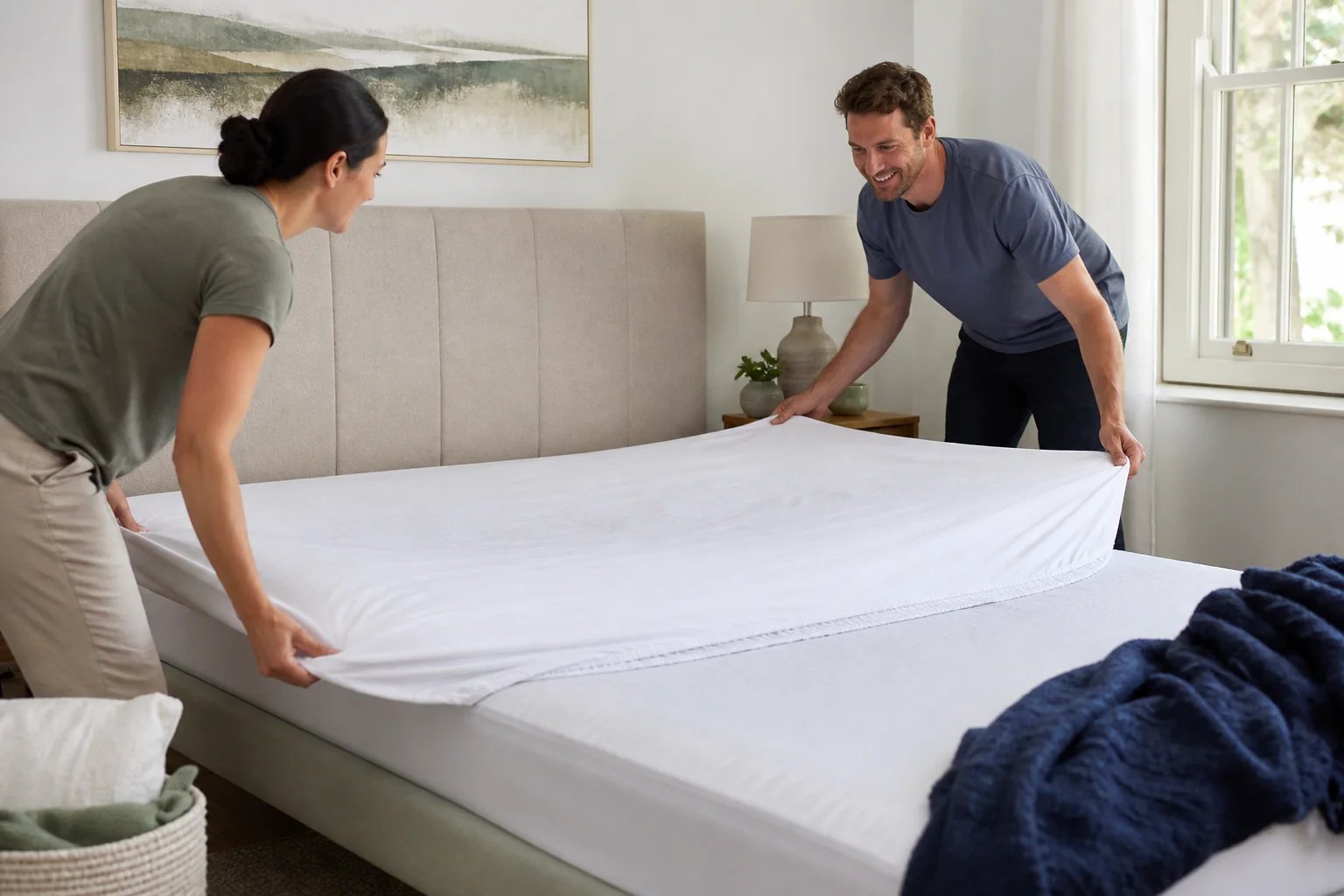
A mattress protector is an unglamorous layer with an important practical advantage: it can be removed and washed, while a mattress cannot. Everyday perspiration, spilled drinks, pet accidents, and dust reach the sleep surface gradually or all at once. A protector creates a replaceable barrier and can help keep routine cleanup manageable.
Options range from thin fitted sheets to padded covers and encasements. Choose for the problem, mattress depth, feel, and laundry routine. A layer that slips or traps too much heat will end up in a closet.
The Saturday-Morning Spill
A child climbs into the main bed with a cup of water while the dog settles at the foot. The cup tips, soaking the fitted sheet. With a washable waterproof protector underneath, the family can strip two layers, blot any moisture, and remake the bed after laundry. Without one, they are trying to dry a thick mattress before bedtime.
That moment explains why fit and laundering matter. The protector needs to cover the vulnerable surface, stay flat under movement, and fit the washer. A simple, quiet fitted design may serve this household better than a heavily padded model that changes the feel of the mattress.
Define the Level of Coverage
Fitted protectors cover the top and sides much like a fitted sheet. They are easy to remove and suit routine spill protection, though the underside remains uncovered. Anchor-style pads cover the sleep surface with elastic straps at the corners and may be convenient for occasional-use beds, but coverage is limited. Encasements zip around the entire mattress and require more effort to install.
Water-resistant and waterproof are not interchangeable. A waterproof membrane suits liquid concerns; a breathable, non-waterproof pad may be enough for a washable buffer. Seek professional guidance when a specific allergen or pest issue drives the purchase.
- Use fitted coverage for frequent removal and everyday spills.
- Consider an encasement when complete coverage is specifically needed.
- Do not assume a padded mattress topper provides liquid protection.
Protect the Mattress Feel
A very thick or quilted protector can add cushioning, which may be welcome on a guest bed but can obscure the feel of a carefully chosen mattress. Thin knit surfaces preserve contouring more closely. Waterproof membranes vary in flexibility; read reviews for recurring comments about sound, but remember that fitted-sheet tension and mattress shape also affect noise.
Warm sleepers should favor thin construction and little padding rather than treating cooling claims as certainty. The barrier still affects airflow, so clear return terms are useful when comfort is uncertain.
- Choose minimal padding if you want to preserve mattress responsiveness.
- Smooth wrinkles before adding the fitted sheet.
- Compare surface fabric and barrier material separately.
Measure Depth and Plan Rotation
Mattress size labels do not tell the whole fit story. Measure the total depth, including any topper that will remain underneath, and check the protector's pocket range. Corners need enough stretch to stay on without pulling the sidewall upward. An oversized pocket can also bunch, so seek a range close to the actual measurement.
A spare protector is worthwhile on a child's bed, guest bed, or any bed where a middle-of-the-night change is possible. It can be stored with a spare fitted sheet as a ready-made change kit. Check whether high dryer heat can damage the barrier; gentle drying may extend useful life and reduce the chance of discovering a damaged layer only after the next spill.
- Measure total mattress depth at a corner.
- Check whether the protector can be washed with normal bedding.
- Keep a second clean layer where fast changes matter.
A quick before-you-buy checklist
- Identify whether you need spill, surface, or full encasement coverage.
- Measure the mattress depth with any topper in place.
- Confirm whether the product is waterproof or only water-resistant.
- Choose padding based on how much feel change is acceptable.
- Check washer and dryer instructions for the barrier material.
- Consider a spare protector for rapid bed changes.
The bottom line
Select protection for the household risk, measure pocket depth, and avoid unwanted padding. The best protector stays flat, feels unobtrusive, and washes without fuss.
Frequently asked questions
Is a mattress protector the same as a mattress topper?
No. A protector primarily provides a washable barrier, while a topper is designed to change cushioning or support. Some protectors have light quilting, but that does not make them equivalent. Decide whether the priority is protection, feel adjustment, or both, and read the construction details carefully.
Can a waterproof protector make a bed warmer?
Any added layer can affect airflow and heat perception, and waterproof membranes may be more noticeable to warm sleepers. A thin protector with a breathable-feeling top and little padding may be less intrusive. Room temperature, sheets, and bedding layers also influence comfort.
How often should a mattress protector be washed?
Follow its care label and wash promptly after spills. For routine use, coordinate cleaning with household needs and sheet changes without exceeding the product's recommended care. Keeping a spare makes it easier to protect the mattress while the first one is being washed and fully dried.
More in Bedding & Bath
More guides you'll use

How to Choose Breathable Sheets for Every Season
Compare fibers, weaves, feel, and care requirements to build a comfortable sheet rotation through changing weather.
Read the guide
A Practical Pillow Guide for Different Sleep Styles
Use sleep position, mattress feel, fill behavior, and care preferences to narrow an overwhelming pillow aisle.
Read the guide
Choosing a Duvet Insert Without Guesswork
Compare warmth, fill, weight, construction, sizing, and care to choose a duvet insert that fits your room and routine.
Read the guide