
A Guest-Ready Living Room Without the Fuss
Use flexible seating, clear surfaces, and a fast reset routine to welcome visitors without maintaining a formal room.
Shopping disclosure: Well1566 Home may earn a commission from qualifying purchases made through marked links, at no extra cost to you. Recommendations are based on use cases and published details; we do not claim hands-on use unless an article explicitly documents it. Read our full disclosure.
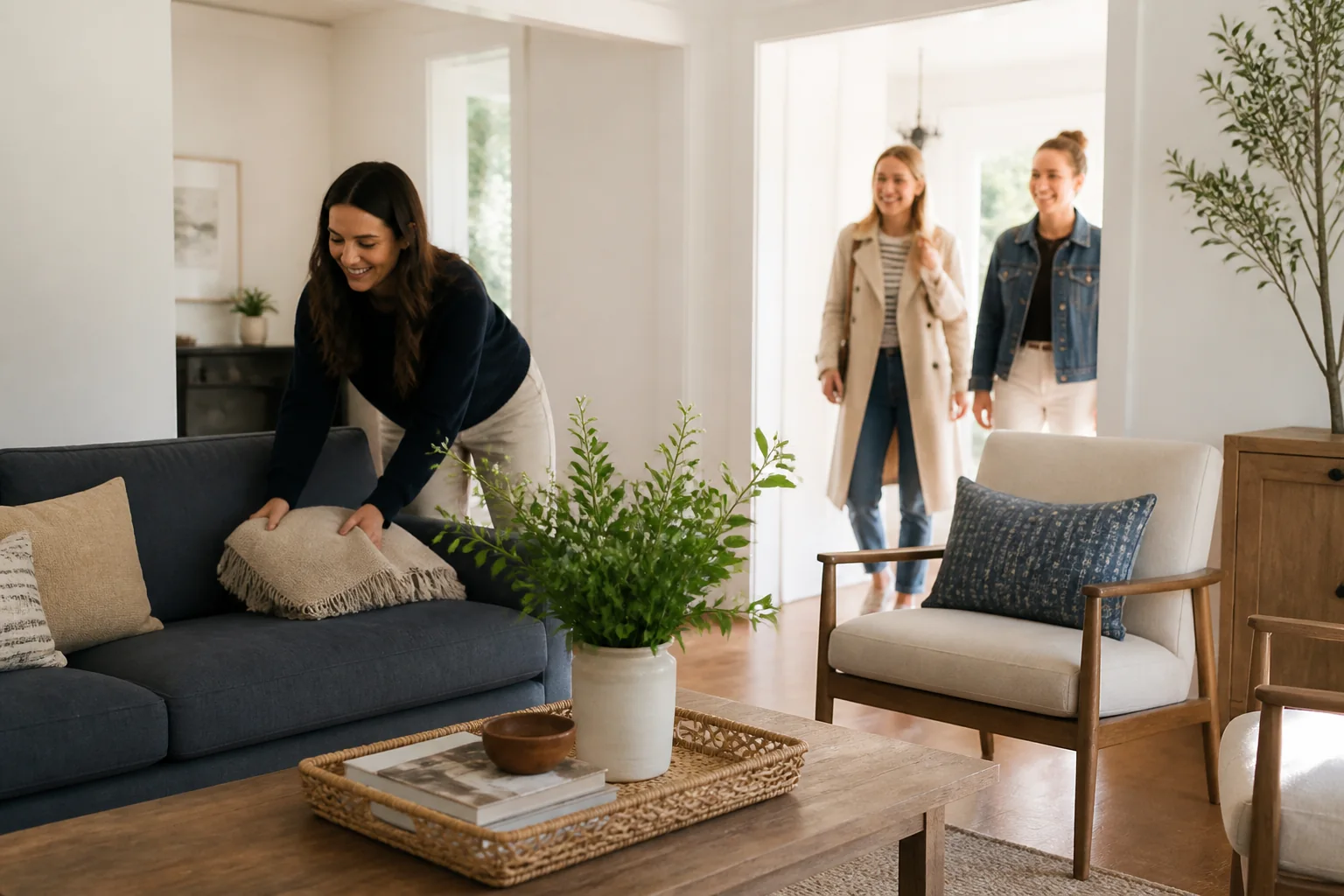
A guest-ready living room is not a room that stays untouched. It is an everyday space that can shift from homework, television, or quiet reading to conversation in a short reset. The most useful purchases are flexible: a table that moves, a chair light enough to turn, and storage that gives common clutter a quick destination.
Begin with the number of people you usually host, not the largest gathering you can imagine. Four comfortable conversation seats used regularly are more valuable than extra furniture that crowds the room all year. Consider traffic, drink placement, lighting, and what guests need without asking. Then choose pieces that also serve the household between visits.
Friends Arrive in Thirty Minutes
A text arrives after lunch: two friends are nearby and would love to stop in. The coffee table holds a puzzle, charging cables, and yesterday's mail. One chair faces the television, the only coaster is in another room, and a bulky storage basket blocks the easiest route to the sofa. Nothing is disastrous, but each small task lengthens the welcome.
A practical reset starts with a lidded basket for active projects, a tray that gathers remote controls and coasters, and one lightweight chair rotated toward the sofa. A nesting table moves beside the extra seat. A lamp replaces the harsh ceiling fixture, and one clear shelf receives guests' small belongings. The room still looks lived in, but its layout now supports conversation.
Arrange for Conversation and Clear Movement
Seats should face one another closely enough for easy conversation while leaving a clear route into and through the room. Map the usual paths to doorways, windows, and adjacent rooms. A side chair can sit at an angle rather than lining every piece against the wall. Use painter's tape to preview any new footprint and verify that reclining, drawers, or doors still move.
Count landing spots as carefully as seats. Each guest should be able to reach a stable surface without leaning across someone else. Small movable tables often solve this more gracefully than one oversized coffee table. Check height against the nearby seat and review the base shape so feet can rest comfortably.
Store Everyday Life in One Quick Layer
Fast tidying works when active clutter has a temporary home. A lidded basket can hold a puzzle, controllers, or a current craft without pretending the project is finished. A shallow tray groups objects that remain visible. Avoid moving everything into an unassigned closet, where the cleanup simply becomes tomorrow's search.
Choose containers by contents and access. Soft-sided baskets suit blankets and toys, while papers need a flatter, more supportive place. A storage ottoman can add seating and conceal larger items, but its lid movement and internal dimensions should fit the intended use. Leave breathing room rather than filling every container to the top.
Add Comfort Guests Can Understand
A visitor should be able to see where to set a coat, find a coaster, and adjust a nearby light without instruction. Layer ambient and task lighting so the room feels welcoming after sunset. Keep a folded throw available, but avoid covering every seat with cushions that must be moved before anyone can sit.
Material choices should support real use. Washable pillow covers, wipeable tray surfaces, and easy-care rugs reduce anxiety around drinks or snacks. If children or pets share the room, compare care guidance before color. A calm palette can come from repeated tones and textures rather than delicate finishes.
A quick before-you-buy checklist
- Count the guests you host regularly and plan seats for that reality.
- Keep doorways and the room's main walking route clear.
- Provide a reachable surface beside each likely seating position.
- Choose one container for active projects and everyday loose items.
- Layer soft ambient light with any task lighting the room needs.
- Confirm upholstery, rugs, and covers fit the household's care routine.
The bottom line
A guest-ready living room relies on flexible furniture and obvious hospitality rather than formal perfection. Protect the walking route, turn seating toward conversation, and give everyday clutter one quick but temporary home. When comparing retailer listings, focus on exact dimensions, furniture movement, fabric care, and assembly. Buy pieces that improve ordinary evenings as well as occasional visits, because those are the items most likely to keep earning their space.
Frequently asked questions
How many throw pillows should stay on the sofa?
Keep enough for comfort without requiring guests to build a floor pile before sitting. The useful number depends on sofa width and household habits, so remove any pillow that consistently gets moved elsewhere.
What is the fastest way to make a living room feel ready?
Clear the primary surfaces, open the walking path, group the seating, and turn on warm ambient light. Those changes affect how the room functions more than extensive decorative styling.
Should I buy folding chairs for occasional visitors?
They make sense when gatherings exceed everyday seating and there is a reliable storage place. For frequent small visits, a compact accent chair or sturdy ottoman may contribute more between gatherings.
More in Everyday Living
More guides you'll use

How to Build a Welcoming Entryway That Works Every Day
Create an entry that catches daily clutter, supports quick departures, and still feels warm when someone walks through the door.
Read the guide
A Calmer Laundry Routine for Busy Weeknights
Turn laundry from one oversized weekend project into a steady routine supported by sensible sorting, drying, and folding tools.
Read the guide
How to Make a Reading Corner You Will Actually Use
Build a comfortable, well-lit place for regular reading without turning an unused corner into a decorative project.
Read the guide