
A Practical Guide to Fresher Indoor Air
Reduce everyday odors and airborne household debris with source control, sensible ventilation, and appropriately sized air-cleaning tools.
Shopping disclosure: Well1566 Home may earn a commission from qualifying purchases made through marked links, at no extra cost to you. Recommendations are based on use cases and published details; we do not claim hands-on use unless an article explicitly documents it. Read our full disclosure.
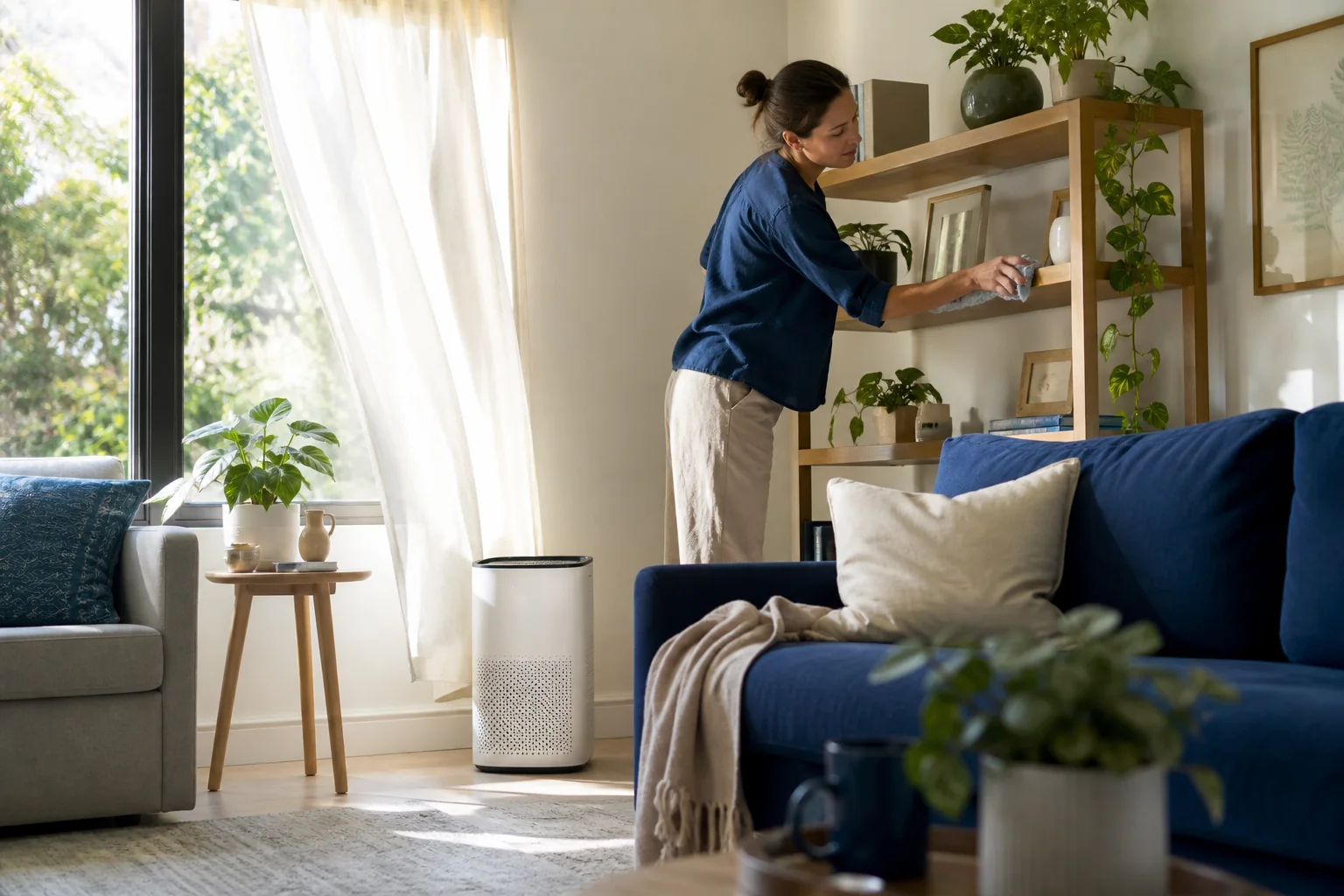
A room can feel stale after cooking, cleaning, wet pet walks, or a day with every window closed. Fresher air begins with removing or containing the source, then ventilating when conditions allow. Portable air cleaners and exhaust fans can support that routine, but no device replaces cleaning, moisture management, or attention to persistent building problems.
Buying decisions should be grounded in the room and the concern. Measure the space, note where people spend time, and consult official guidance for unusual odors, combustion concerns, water damage, or symptoms. This article focuses on everyday household freshness rather than medical outcomes. When comparing products, rely on published specifications, replacement needs, noise controls, and instructions for safe placement.
Dinner Lingers Into the Next Morning
A small apartment kitchen opens into the living room. After a strongly seasoned dinner, the range area is wiped but the scent remains in curtains and the nearby rug. Opening the only window helps when outdoor air is comfortable, yet traffic noise makes that impractical overnight. A scented spray would add another odor rather than address the source.
The household changes the sequence: use the kitchen exhaust as directed during cooking, cover food scraps promptly, wash the oily pan, and ventilate for a short period when conditions permit. A portable air cleaner sits with unobstructed airflow in the living area and runs on a quieter setting later. The rug and soft furnishings receive routine cleaning. Each step has a defined job, so the appliance is support rather than the entire plan.
Start With Sources and Airflow
Trace when the room feels least fresh. Cooking residue, damp towels, litter areas, dusty textiles, and stored trash call for different actions. Remove the source, clean nearby surfaces appropriately, and use installed exhaust fans according to their instructions. Open windows only when weather, outdoor air, noise, and household safety make that sensible.
Avoid masking a recurring issue with fragrance. A persistent musty, smoky, gas-like, or unexplained odor deserves investigation rather than decoration. Building management or a qualified professional may be appropriate depending on the situation. Everyday products should never be presented as solving structural moisture, combustion, or other safety problems.
Match a Portable Air Cleaner to the Room
Use the maker's recommended room coverage and operating conditions as a starting point, then compare them with measured floor area and ceiling height. Published coverage assumptions can differ, so read the underlying details instead of relying on a large number printed on a product image. A unit that fits the room but is unpleasantly loud may be run less often.
Consider filter type, replacement schedule, availability, control lights, and the space required around the intake and outlet. Ongoing replacement is part of the ownership decision even when the initial device looks convenient. Place the unit on a stable surface with clear airflow, away from curtains or furniture that could block it, following the maker's guidance.
Support Freshness With a Repeatable Routine
Textiles hold household debris and cooking residue, so vacuum rugs and upholstery with tools appropriate to their care instructions. Launder washable pet bedding, throws, and kitchen fabrics on a practical rotation. Empty collection bins and replace filters as directed; delayed maintenance can undermine the reason the product was purchased.
Track one week of results in plain terms: Is the cooking smell gone by bedtime? Is the cleaner quiet enough to keep running? Does the filter indicator make maintenance obvious? If the routine does not improve everyday freshness, reconsider the source and placement before buying a second device. Escalate persistent or concerning conditions to the appropriate professional.
A quick before-you-buy checklist
- Identify the likely source and when the room feels stale.
- Use ventilation only when outdoor and household conditions make it appropriate.
- Measure room area and note ceiling height before comparing coverage.
- Check operating sound, display controls, and required clearance.
- Review filter availability and the published replacement routine.
- Seek qualified help for persistent, unusual, or safety-related odors.
The bottom line
Fresher indoor air comes from a sequence: control the source, ventilate sensibly, clean odor-holding materials, and add an appropriately sized air cleaner when it serves a clear role. Compare current retailer listings against published room guidance, filter needs, sound settings, and placement instructions. Do not overbuy based on a dramatic coverage claim, and do not ask a portable device to conceal a persistent condition that needs professional attention.
Frequently asked questions
Where should a portable air cleaner be placed?
Use a stable location in the room it is intended to serve, with intake and outlet areas clear. Follow the manufacturer's clearance directions and avoid blocking airflow with curtains, furniture, or a tight corner.
Can fragrance products make indoor air cleaner?
Fragrance changes how a room smells but does not remove the source by itself. Address trash, cooking residue, damp materials, or dirty textiles first, and consider household sensitivities before adding scent.
How do I compare air-cleaner room coverage?
Measure the room and read the conditions behind each published recommendation, including ceiling assumptions and operating setting. Coverage labels may be calculated differently, so compare the underlying specifications and instructions.
More in Everyday Living
More guides you'll use

How to Build a Welcoming Entryway That Works Every Day
Create an entry that catches daily clutter, supports quick departures, and still feels warm when someone walks through the door.
Read the guide
A Calmer Laundry Routine for Busy Weeknights
Turn laundry from one oversized weekend project into a steady routine supported by sensible sorting, drying, and folding tools.
Read the guide
How to Make a Reading Corner You Will Actually Use
Build a comfortable, well-lit place for regular reading without turning an unused corner into a decorative project.
Read the guide