
Better Evening Lighting for a Softer Home
Layer practical lamps at human height so evenings feel comfortable without giving up the light needed for reading, cooking, and moving safely.
Shopping disclosure: Well1566 Home may earn a commission from qualifying purchases made through marked links, at no extra cost to you. Recommendations are based on use cases and published details; we do not claim hands-on use unless an article explicitly documents it. Read our full disclosure.
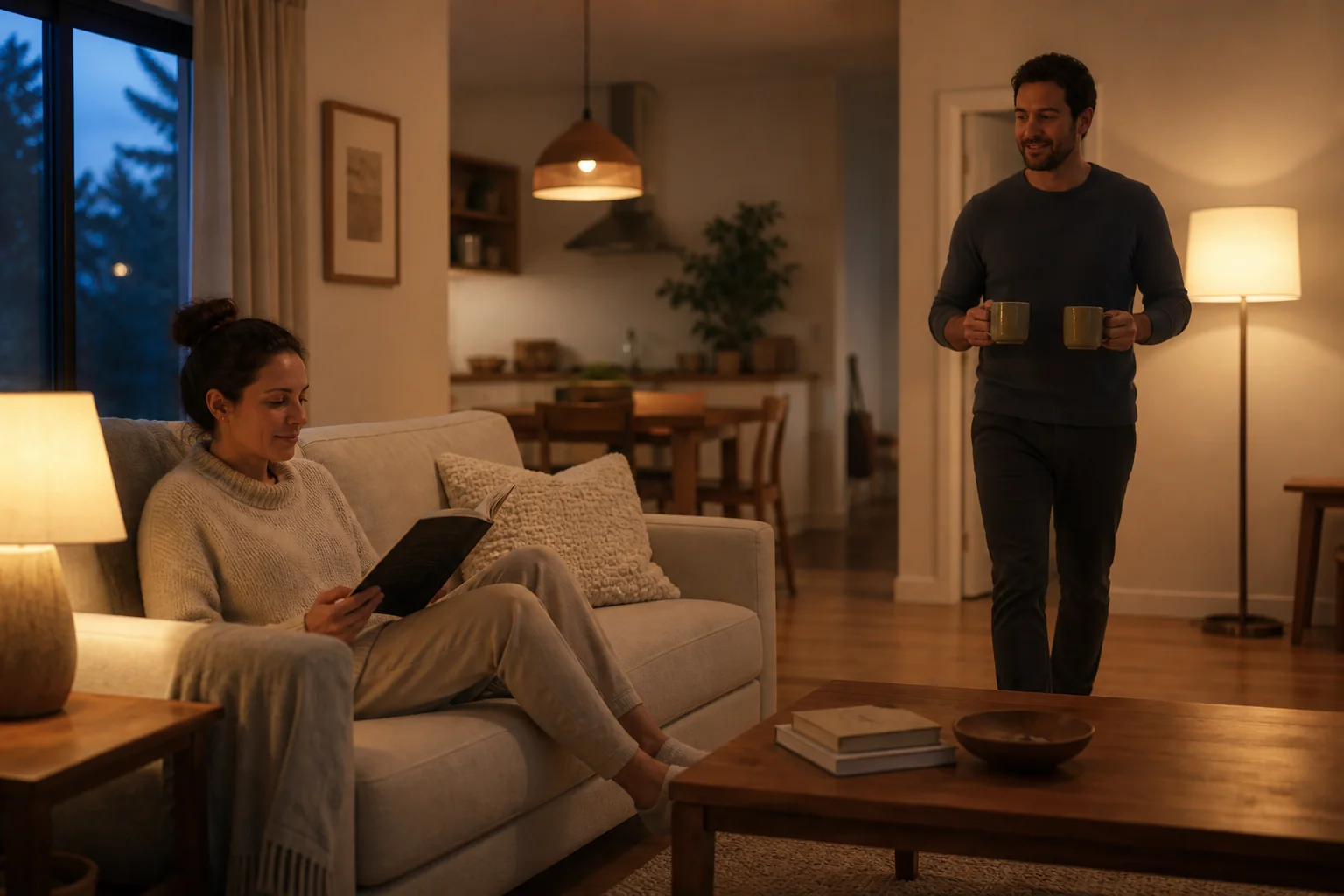
One bright ceiling fixture can make an otherwise comfortable room feel flat at night. Softer evening lighting comes from several smaller sources placed near the activities they support. A shaded lamp beside the sofa, a focused reading light, and a low lamp across the room create depth while letting the household turn on only what is needed.
A good plan starts with tasks and outlets, not a shopping cart full of decorative lamps. Walk through a typical evening and mark where someone reads, prepares a drink, tidies toys, or crosses a dim pathway. Choose fixtures that direct light appropriately, accept suitable bulbs, and have switches people can reach. Always follow the fixture maker's electrical, bulb, and placement instructions.
From Dinner Cleanup to the Sofa
After dinner, the kitchen remains brightly lit while the adjoining living room has only one central fixture. Someone wants to read on the sofa, another is completing a puzzle at the table, and the route to the hallway falls into shadow. Turning on the ceiling light solves visibility but makes the whole room feel like a work space.
The revised setup uses a floor lamp beside the sofa, a small shaded lamp on a console, and a portable task lamp brought to the puzzle. The central fixture stays off. Light sits closer to eye and hand level, the hallway edge remains visible, and each activity has enough local illumination. A smart plug or simple timer can control the hard-to-reach console lamp without changing the fixture.
Plan Three Useful Layers
Ambient light helps people orient themselves, task light supports focused work, and accent light adds gentle depth. One fixture can contribute to more than one layer, but every lamp should have a reason. Start with dark corners and active seats. A lamp placed only for visual symmetry may not improve the evening routine.
Map outlets and walking paths before choosing positions. Avoid cords under rugs or across traffic areas, and use cable management suited to the surface. Check that doors and reclining furniture cannot strike a lamp. In households with children or pets, base stability and cord placement deserve as much attention as shade style.
Choose Shades and Direction Deliberately
An opaque shade sends more light up or down, while a translucent shade can glow around the room. An adjustable head is useful for reading or hobbies because it can aim light away from another person's eyes or a television screen. Review fixture dimensions from the seated position, not only as a decorative object in the room.
Use bulbs compatible with the fixture and its stated limits. If you want dimming, confirm that the fixture, bulb, and control are designed to work together. Color appearance can vary across products, so keeping related lamps within a consistent family may make the room feel more cohesive without requiring identical fixtures.
Make Controls Part of the Comfort
A lamp is less useful when its switch requires moving furniture or reaching behind a table. Foot switches suit some floor-lamp locations, while inline or pull switches may be easier beside a chair. Smart plugs can group compatible lamps or add a schedule, but basic controls should remain understandable to guests and household members.
Build the room one source at a time. Add the lamp that solves the clearest dark spot, use it for several evenings, then decide whether another layer is needed. This prevents duplicate fixtures and shows whether the real issue is brightness, direction, glare, or inconvenient control.
A quick before-you-buy checklist
- List the tasks and paths that need light during a normal evening.
- Map outlets, switches, doors, and furniture movement.
- Choose shade direction based on ambient or focused use.
- Confirm bulb type, fixture limits, and any dimming compatibility.
- Keep cords outside walkways and follow placement instructions.
- Add one lamp first, then reassess glare, shadows, and control.
The bottom line
Softer evening lighting is an arrangement, not a single dramatic fixture. Place ambient, task, and accent sources near real activities, manage cords thoughtfully, and make every switch easy to reach. Retailer searches can help compare lamp height, shade direction, base footprint, bulb compatibility, and control style. Start with the most-used dark area and expand only when another clear need remains; a few well-placed lamps usually create more comfort than many decorative ones.
Frequently asked questions
Do all lamps in one room need to match?
No. Repeating one finish, shade color, or overall shape can create cohesion while allowing each fixture to serve a different task. Functional placement matters more than buying a perfectly matched set.
Where should a floor lamp sit beside a sofa?
Place it where the shade directs light toward the activity without exposing the bulb at seated eye level. Keep the base stable, the switch reachable, and the cord outside the walking route.
Are smart bulbs necessary for evening lighting?
No. Reachable switches and compatible dimmers can be enough. Smart controls are useful when they solve a specific access or scheduling problem, but they add setup and should remain understandable to everyone using the room.
More in Everyday Living
More guides you'll use

How to Build a Welcoming Entryway That Works Every Day
Create an entry that catches daily clutter, supports quick departures, and still feels warm when someone walks through the door.
Read the guide
A Calmer Laundry Routine for Busy Weeknights
Turn laundry from one oversized weekend project into a steady routine supported by sensible sorting, drying, and folding tools.
Read the guide
How to Make a Reading Corner You Will Actually Use
Build a comfortable, well-lit place for regular reading without turning an unused corner into a decorative project.
Read the guide